
Last updated October 17, 2026
 Metal roofing
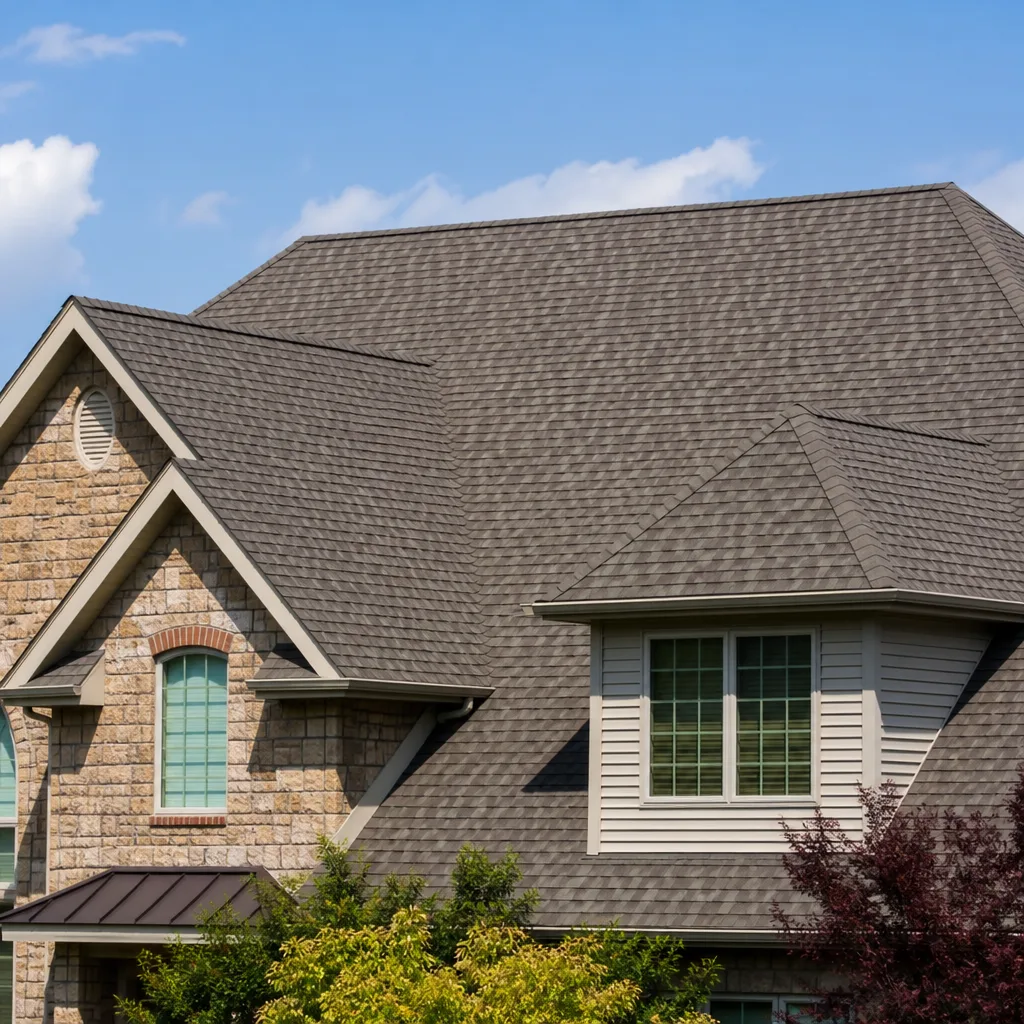 Architectural shingles
 Tile roofing
 GAF
GAF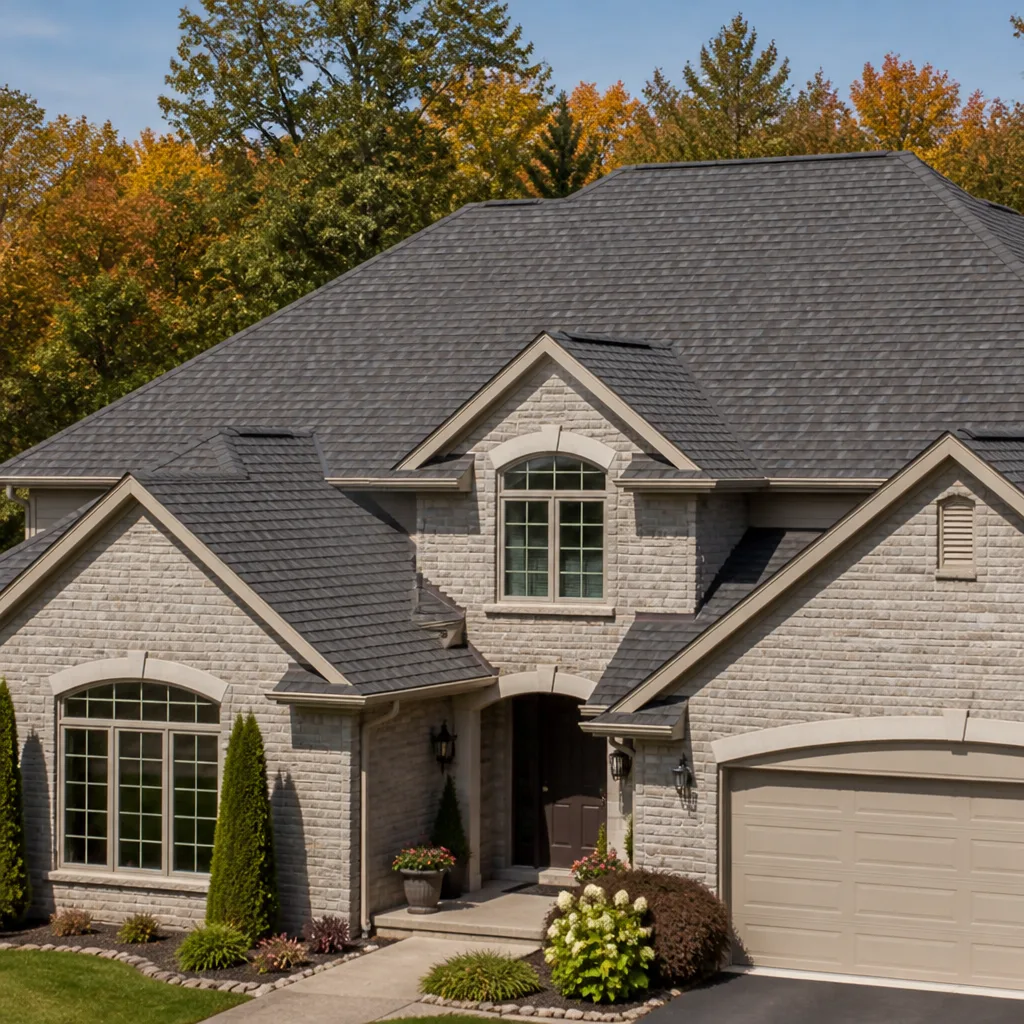 Owens Corning
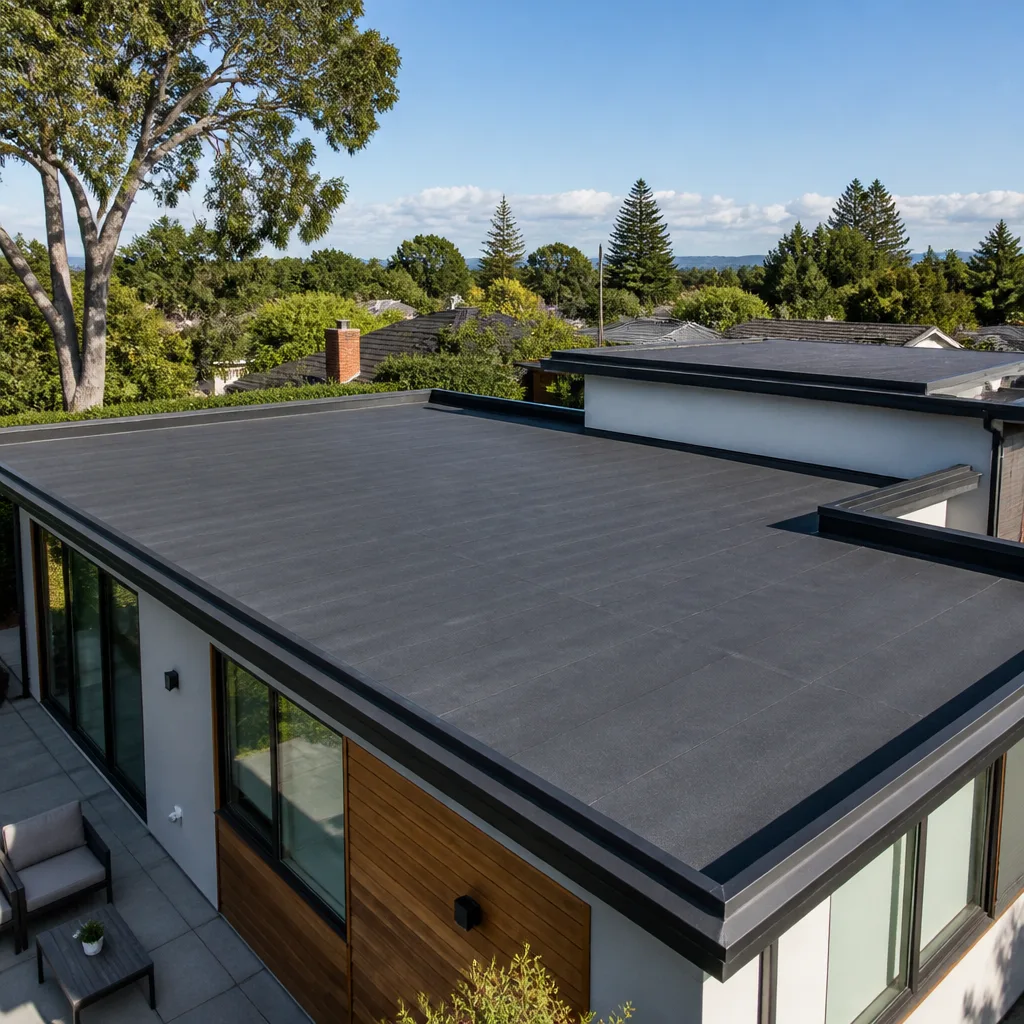 Flat & low-slope
Free roof inspection with deck photos before we talk money - GAF and Owens Corning certified installation
How to Hire a Roofing Contractor in Orange County: A Step-by-Step Guide
California’s Contractors State License Board (CSLB) receives more complaints about roofing contractors than nearly any other trade, and a striking share of those complaints come from homeowners who read online reviews but never once checked a license number. Orange County’s mix of Spanish tile, composition shingle, and flat roofing creates plenty of room for honest work and dishonest shortcuts alike. This guide walks through the three verification steps most homeowners skip, how to read a contract before signing it, and what separates a roofer worth hiring from one who will disappear after the first rain. You’ll finish with a repeatable process that protects you on any roof project in Orange County, from a small repair in Irvine to a full tear-off in Anaheim Hills.
Quick Answer
To hire a roofing contractor in Orange County, verify the license number on the CSLB website, confirm workers’ compensation insurance is active, and require a written contract with fixed pricing, a payment schedule tied to milestones, and a written workmanship guarantee. Compare at least three bids using identical specification sheets so you’re pricing the same roof, and never pay more than a small deposit before materials arrive. For a detailed breakdown of what drives these numbers, see our Roofing Cost Breakdown: The Orange County Homeowner’s Reference for 2026. Expect to pay $4.50 – $7.50 per square foot for an architectural asphalt shingle replacement in Orange County, and run from any bid that comes in dramatically under that range without a written explanation.
Styles & brands we work with
Table of Contents
- Step 1: Verify the California Roofing License (CSLB) in Under Three Minutes
- Step 2: The Four Contract Clauses That Separate Professionals From Price Changers
- Step 3: How to Make Three Bids Apples-to-Apples
- What a Written Workmanship Guarantee Should Actually Say
- Orange County Storm Chasers: The Red Flags
- Material Choices That Fit Orange County Roofs
- Deposits, Payment Schedules, and the Down Payment Rule
- Permits, Inspections, and Why They Matter in OC
Step 1: Verify the California Roofing License (CSLB) in Under Three Minutes
Every legitimate roofing contractor in Orange County carries a C-39 roofing classification issued by the California Contractors State License Board. Checking the license takes about three minutes, and it’s the single highest-value action you can take before signing anything. Here’s the process, step by step:
- Go to the CSLB website at cslb.ca.gov and click “Check a License” under the Consumers tab.
- Enter the contractor’s name or license number. The license number should be on the business card, the website, and every proposal or contract.
- Confirm the classification reads “C-39 Roofing.” A general building contractor with a B license can legally roof, but a specialist with C-39 has passed a roofing-specific trade exam.
- Check the license status. The status line matters more than the number itself.
Here’s what the CSLB status codes actually mean, because “active” is only the beginning:
- Active: The license is current, the qualifier has not had a disciplinary action that suspends it, and the business can legally operate.
- Inactive: The license exists but the contractor cannot legally work in California. An inactive license on a proposal is a serious red flag.
- Suspended: The CSLB has pulled the license, usually because of a failure to carry workers’ compensation insurance or a disciplinary order. Walk away.
- Expired: The contractor forgot to renew or chose not to. Either way, no legal work can happen until it’s renewed.
- Cancelled: The license is gone. Do not hire this person, no matter how good the reviews look.
- Fixed Price with Change Order Procedure. The contract states a specific dollar amount for the scope of work described, and any addition or subtraction requires a signed, written change order that you approve before the new work begins. If a contract says “price subject to adjustment based on site conditions,” that’s not fixed pricing. That’s an invitation.
- Decking Repair Unit Price. Every roofer knows that some roof decking will be rotten once the old shingles come off, especially on older Orange County homes built in the 1960s and 1970s. A professional contract says exactly what replacement decking costs per sheet, in writing, before tear-off starts. That way, if the decking is bad, you know the price already. If there’s no unit price for decking, the “surprise” sheet replacement is where honest-looking bids inflate by thousands.
- Full Scope of Work, Including Hidden Items. Drip edge, ridge cap, flashing, underlayment, pipe boots, valley liners. If these terms don’t appear in your contract, they might not appear on your roof. A complete scope lists every component. A vague scope lists “roof installation” and leaves the rest to the crew’s discretion. The trade terms matter here: drip edge is the metal strip at the roof’s edge that keeps water from running behind the gutter. Ridge cap is the shingle that covers the peak where two roof slopes meet. Underlayment is the waterproof layer beneath the shingles. All three belong in the scope.
- Written Workmanship Guarantee Language. Not “we guarantee our work.” Not “all work is guaranteed.” The clause should state a specific term, define what the guarantee covers, and explain exactly what happens if the work fails. More on this in a later section, but the short version: if the guarantee paragraph doesn’t tell you what happens when something goes wrong, it tells you nothing.
- Drip edge replacement. The metal strip at the roof’s edge costs a few hundred dollars to replace on a typical Orange County home, but it requires removing the first row of shingles to do properly. A cheap bid skips it. Three years later, water is running behind the gutter, and the fascia is rotting.
- Underlayment upgrade to synthetic. Many Orange County roofs can still be done with #30 felt, but synthetic underlayment lasts longer and handles our occasional heavy downpours better. A bid that omits underlayment specification entirely is a bid you can’t compare.
- Flashing replacement rather than reuse. Flashing is the metal that seals the joints where the roof meets a chimney, skylight, or wall. Reusing old flashing saves the contractor money now and costs the homeowner a leak within a few years. The bid should say “replace all flashing.” Not “reuse where possible.”
- Ventilation correction. Orange County attics bake in the summer. A proper roof includes intake and exhaust ventilation calculated to the attic’s square footage. Cheap bids don’t touch ventilation, which degrades shingle life and can void a manufacturer’s material warranty.
- Disposal fees and permit costs. A full tear-off in Orange County generates several tons of debris. A cheap bid “forgets” to include the dumpster and landfill fees, then charges them as an addendum after the tear-off starts.
- The term. How long is the workmanship covered? One year, two years, five years? A specific number. If the number isn’t written down, the guarantee may as well not exist. At Tilehurst, the 365-Day Done Right Promise runs a full year on every job, and it means what it says: if it’s not done right, we make it right.
- What’s covered. Labor defects only? Materials and labor? The guarantee should define what a “defect” is. Leaks at flashing points, lifting shingles, failed seals, ridge cap that separates. The language should list these.
- What’s excluded. Storm damage, foot traffic on the roof, third-party modifications. Exclusions are fair; a guarantee that lists them is being honest. A guarantee that lists none is either naive or leaving itself room to deny everything.
- The remedy and the response time. If the work fails inside the guarantee term, what actually happens? The professional answer: we return at no charge, repair the issue, and document what we did. The vague answer: “we’ll evaluate the situation.” That sentence is a delay tactic in a roof leak.
- Transferability. If you may sell the home during the guarantee term, does the guarantee follow the roof or the original buyer? Many Orange County homeowners sell within five years. A transferable guarantee adds tangible value at closing.
- No local business address. The proposal lists a PO box or a residential address in another state. A roofer with a real Orange County base can tell you where the yard is, where the trucks park, and where the materials are staged.
- Aggressive door-to-door pressure after a rain event. Legitimate Orange County roofing companies are busy year-round with scheduled work. Storm chasers appear on your doorstep the week after the storm because their entire business model is the storm.
- “We’re already in your neighborhood” language. This is a scripted line designed to create the illusion of convenience. It works because it sounds local. It means nothing about the quality of the roofer.
- Requiring a large deposit before materials arrive. Professional roofing contractors in California operate with the capital to order materials. A contractor who needs 50% down before the first shingle is unloaded may be using your money to finance the job, which is a dangerous position for you to be in.
- Pushing an insurance claim for “storm damage” on a roof with no obvious leaks. This is how storm chasers generate work. They convince you to file a claim, then position themselves for the payout. If a roofer says “don’t worry about the deductible” or “we’ll work the insurance company for you,” proceed with extreme caution.
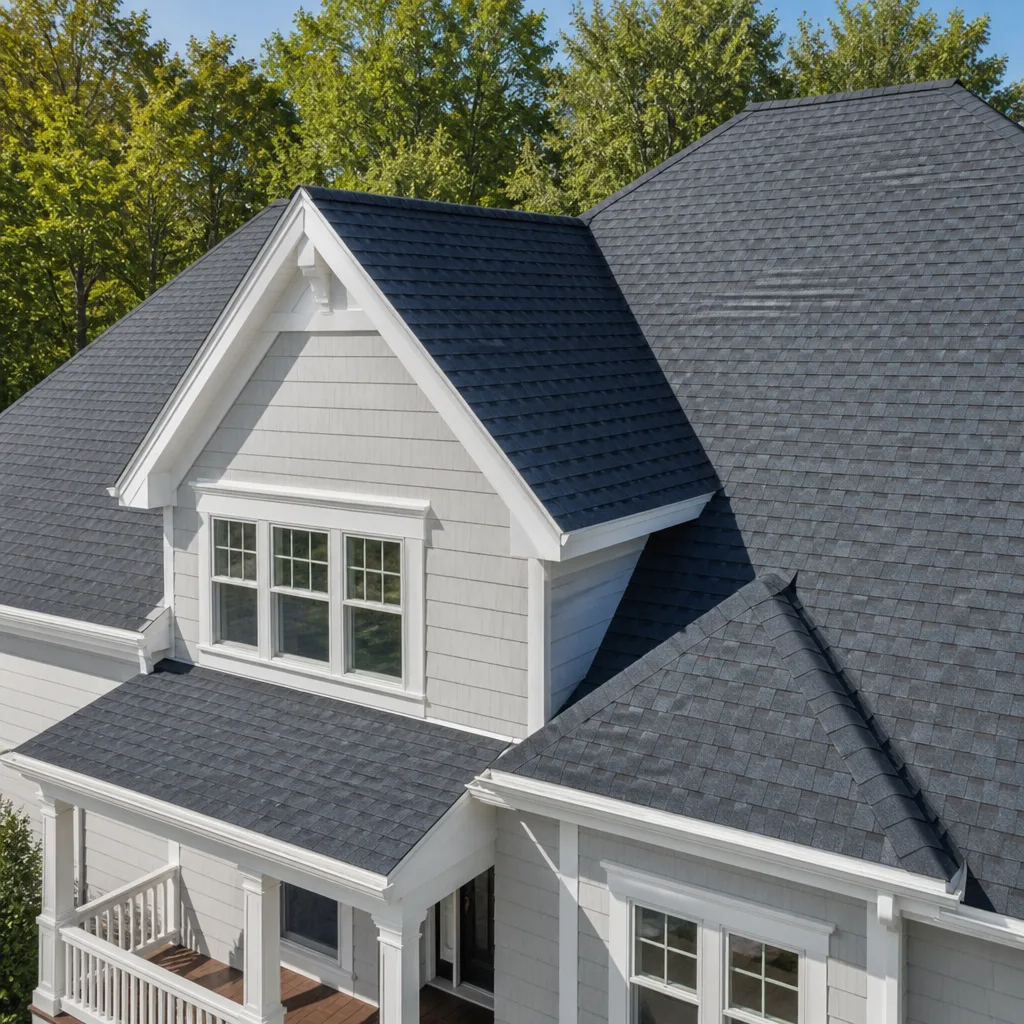
- Architectural Asphalt Shingles: The most common roof material in the county for good reason. Laminated shingles from GAF, CertainTeed, or Owens Corning handle our heat and occasional heavy rains, install quickly, and cost between $4.50 and $7.50 per square foot installed on a full replacement. They last 25 to 30 years with proper ventilation.
- Concrete and Clay Tile: The classic Orange County roof, especially in Spanish and Mediterranean-style neighborhoods. Tile from Boral holds up for 50 to 75 years, handles the sun without fading, and provides natural thermal mass that helps with attic heat. The trade-off is weight. Tile requires a roof structure that can bear the load, and not every Orange County home is built for it without reinforcement. Tile installations typically run $9 to $18 per square foot.
- Flat and Low-Slope Systems: Common on mid-century homes and additions throughout the county. TPO, PVC, and modified bitumen are the standard materials. These require a roofer with specific low-slope experience, because the waterproofing approach is entirely different from a pitched shingle roof.
- Wood Shake and Shingle: Restricted in many Orange County fire zones, especially in the foothill areas near the Cleveland National Forest. If your home has wood shake, the replacement options are typically a fire-rated composite like a shake-profile asphalt or metal, not new wood.
- Initial deposit: 10% or $1,000, whichever is less, at contract signing.
- Material delivery: A progress payment when materials are physically delivered to your property. You see the shingles, underlayment, and flashing on your driveway before you write the second check.
- Tear-off and decking: If decking replacement is required, you pay for the replacement sheets based on the unit price in your contract, not on a new quote delivered after the fact.
- Completion: The final payment is due after the job is done, the site is clean, the permit is signed off, and you’ve walked the roof area with the project lead.
- A full roof replacement requires a building permit in virtually every Orange County city. The permit covers the structural work and requires an inspection at the deck and at the final installation. A contractor who offers to do the job without a permit is offering to work outside the law, and an unpermitted roof can become a problem at resale, when the buyer’s home inspection flags it.
- Small repairs may not require a permit. Patching a few shingles or sealing a flashing point is typically maintenance. Replacing an entire roof deck or changing the roof structure definitely requires one. Your contractor should know the rules in your specific city, not the county overall.
- The final inspection is your leverage. Do not make the final payment until the inspection has passed and the permit is signed off. The inspection is a third-party verifier that the work meets code. It protects you.
- Permits add a few hundred dollars to the project cost. Some contractors omit the permit line to make the bid look cheaper, then tell you the permit is “your responsibility.” If a bid doesn’t include the permit fee, ask why.
One more check on the same page: confirm the business name on the license matches the name on your contract. California allows contractors to operate under a dba, but the CSLB record will show the legal entity. If the names don’t match, ask why before moving forward. In Orange County, where a single roofing company may run crews across forty different neighborhoods, a name mismatch often means you’re dealing with a subcontractor who was never properly disclosed.
We recommend writing the license number down and checking it again on the day the crew arrives. Licenses can and do change status mid-project. A contractor we once followed up for a homeowner in Costa Mesa had an active license at estimate time and a suspended license by the time the tear-off started, because his workers’ comp policy had lapsed. The homeowner would never have known without a second check. The Roofing Company in Orange County you hire should pass this check at the estimate stage and again before the first nail goes in.
Step 2: The Four Contract Clauses That Separate Professionals From Price Changers
The most common complaint filed against roofing contractors in California isn’t about bad workmanship. It’s about the price changing after the job starts. The tear-off begins, the decking looks worse than expected, and suddenly the “firm quote” becomes a moving target. A professional contract closes that door. A vague contract leaves it wide open. Look for these four clauses before you sign anything:
When we write a contract at Tilehurst Roofing Orange County, the written price lands in the homeowner’s hands before any work starts, and the written guarantee on every repair gets delivered before the crew leaves the property, not mailed later. That’s the standard we think every Orange County homeowner should demand from any roofer.
Step 3: How to Make Three Bids Apples-to-Apples
Getting three bids is standard advice, but it only works if you know how to compare them. Orange County homeowners often put three numbers side by side and wonder why one is $9,000, one is $12,500, and one is $18,000 on a roof of the same size. The answer is rarely that one company is greedy and one is generous. The answer is usually that the scope of work is different, and the cheap bid omitted line items the expensive bid included. Here’s what contractors routinely leave off to look cheaper:
The fix is simple: create a one-page specification sheet before you call for bids. List the square footage, the roof pitch, the number of stories, the existing material, whether the job is a repair or a replacement, and the specific components you want priced: drip edge, synthetic underlayment, new flashing, ice and water shield in valleys, ventilation, decking replacement unit price, disposal, and permit fees. Send the same sheet to every contractor and ask them to fill in the dollar amounts on your list. Then compare the numbers line by line, not total against total. Three contractors bidding the same spec is the only apples-to-apples comparison that exists. Roof Replacement in Orange County pricing can shift dramatically once every line item is forced into the open.
What a Written Workmanship Guarantee Should Actually Say
Most roofing companies provide a “guarantee” that says the work is guaranteed, and that’s the entire document. Here’s why that language gives the roofer every exit: if the guarantee has no term, no defined scope, and no remedy, it’s not a guarantee. It’s a marketing sentence. A written workmanship guarantee that actually protects you should state:
Here’s a specific example of vague language versus specific language. Vague: “All workmanship is guaranteed.” Specific: “Tilehurst Roofing guarantees all workmanship for a period of 365 days from the date of project completion. If any workmanship defect appears during that period, Tilehurst will return at no charge to the homeowner, correct the defect, and provide a written record of the correction. This guarantee covers all labor performed under this contract, including flashing, underlayment, and shingle installation.” The second version tells you exactly what you have. That’s what you’re looking for in Orange County. We also stand behind a Free Second Visit if the repair fails inside the guarantee period, which means a failed repair never turns into a second invoice.
Orange County Storm Chasers: The Red Flags
Orange County doesn’t get the violent weather of the Gulf Coast, but every heavy rain event sends a wave of out-of-area crews into neighborhoods like Mission Viejo, Lake Forest, and Tustin, knocking on doors and offering “free roof inspections” that find “storm damage.” Six months later, when the repair fails or the new roof leaks, those crews are in another county. Here are the specific red flags that give them away:
The simplest defense is a second opinion. If a door-knocker says your roof has storm damage, call a local Orange County roofer and ask for an independent assessment. If the local roofer finds nothing, you just saved yourself from a bad job. If they find it too, you have a legitimate claim process to follow. Our team does these second-opinion assessments for homeowners across Orange County, and we never charge for them. Call us at (559) 295-5445 if a storm-chaser has left you with a suspicious diagnosis.
Material Choices That Fit Orange County Roofs
Orange County is a unique roofing market because it contains everything: Mediterranean-style homes in Ladera Ranch that want barrel tile, ranch-style homes in Fountain Valley built for composition shingle, modern builds in Newport Coast with flat or low-slope sections, and century-old Craftsman homes in Santa Ana that need their original silhouette preserved. No single material solves every home, and any roofer who tells you otherwise is selling inventory, not advice. At Tilehurst Roofing Orange County, homeowners choose from seven major manufacturers, including GAF, CertainTeed, and Owens Corning for asphalt shingles, Tamko for value-driven architectural profiles, Atlas and IKO for specific performance needs, and Boral for concrete and clay tile. That choice matters because the product should fit the home and the neighborhood, not just what happens to be on the truck.
Here’s how the main material categories perform in Orange County conditions:
Orange County is a patchwork of fire hazard zones, coastal moisture zones, and inland heat zones. The material conversation should start with your specific microclimate and neighborhood context, not with a roofer’s default product. A good Orange County roofer asks about your five-year plans, your ventilation, your HOA requirements if you have one, and your budget window. Then the material options narrow naturally.
Deposits, Payment Schedules, and the Down Payment Rule
California law caps the down payment on a home improvement contract at 10% of the total project price or $1,000, whichever is less. That’s not a company policy. It’s the law, and it applies to every roofing contractor in Orange County. Any roofer who asks for more than 10% down before work begins is asking you to break the law on their behalf, and that tells you everything you need to know about how they’ll handle the rest of the job.
Beyond the down payment cap, a professional payment schedule looks like this:
No payment should ever be 100% front-loaded, and no reputable Orange County roofing company will ask for that structure. We put the written price before any work starts, and the payment schedule is part of that written document. You should know exactly how much money leaves your account at each stage before the first shingle is ordered.
Permits, Inspections, and Why They Matter in OC
Orange County is not a single permitting jurisdiction. It’s thirty-plus separate cities and unincorporated areas, each with its own building department, each with its own fee schedule, and most with their own roofing-specific inspection requirements. The county’s geography makes permits complicated, and that’s exactly why they matter. Here’s what you need to know:
A professional Orange County roofer pulls the permit, schedules the inspection, meets the inspector on site, and provides you a copy of the signed permit card when the job is done. That’s the standard we hold at Tilehurst Roofing Orange County on every full replacement. The Tilehurst Roofing Orange County home base serves homeowners from Anaheim to San Clemente, and our team handles the permitting process in each city individually, because we know the inspectors in each one.
Common Mistakes to Avoid
- Hiring on the first bid because it’s the quickest. A good roof is a system, and a quick bid often excludes components. The extra two weeks it takes to get three competitive bids pays for itself many times over.
- Believing online reviews without checking the license. Reviews can be bought, deleted, and manufactured. The CSLB license record cannot. Check the license first, then use reviews to understand how the company communicates.
- Signing a contract without decking replacement pricing. Rotten decking is the single most common price increase in Orange County roof replacements, and it’s entirely predictable. A contract without a per-sheet decking price is a contract with a built-in surprise.
- Choosing a roofer who doesn’t offer a written guarantee. If the guarantee isn’t in writing, it doesn’t exist. A verbal promise is worth nothing in a dispute.
- Paying in full before the permit is signed off. The signed permit is the only proof that the work passed inspection. No signature, no final check.
- Letting a storm chaser rush you into an insurance claim. Storm damage claims should follow a thorough inspection by a roofer with a local Orange County presence, not a door-to-door pitch.
- Ignoring ventilation in the quote. Attic ventilation is not optional on an Orange County roof. A roof without proper intake and exhaust wears out early and voids shingle warranties.
See the difference
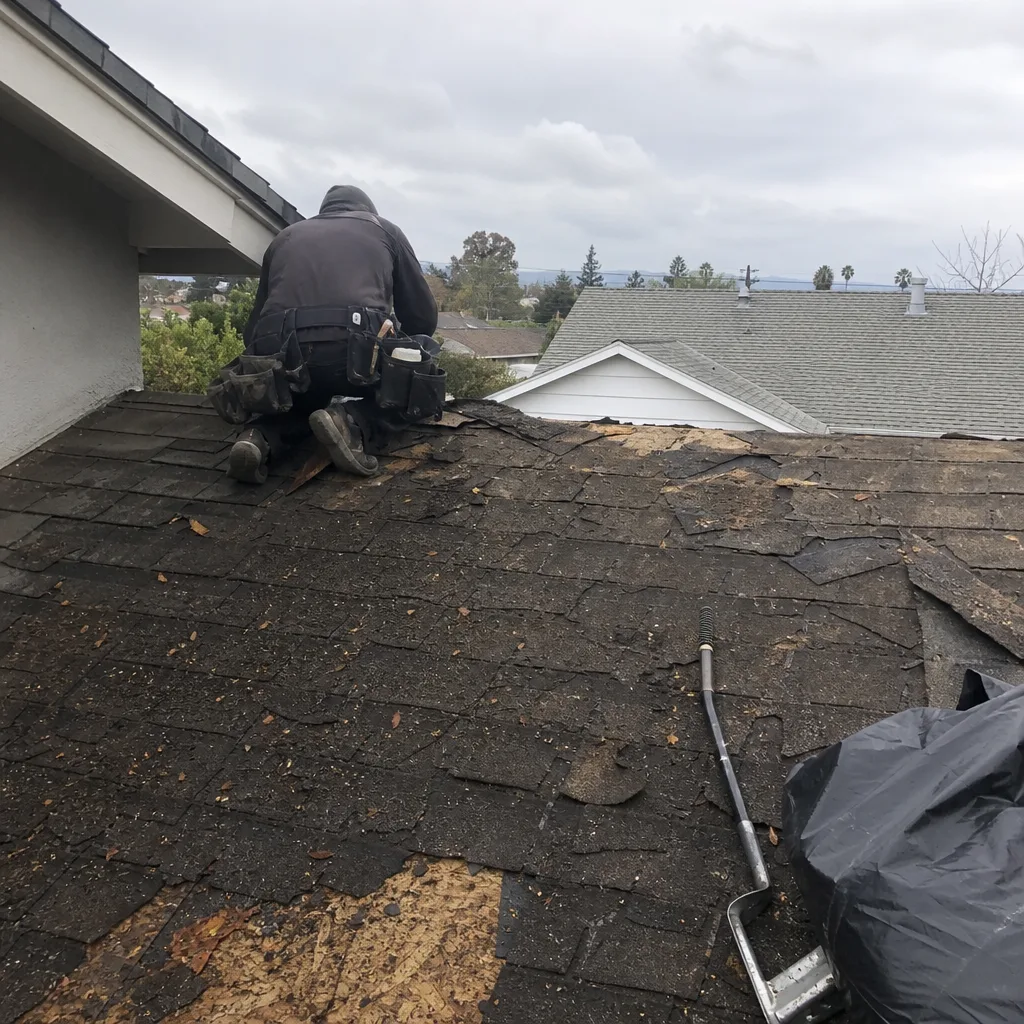 Before
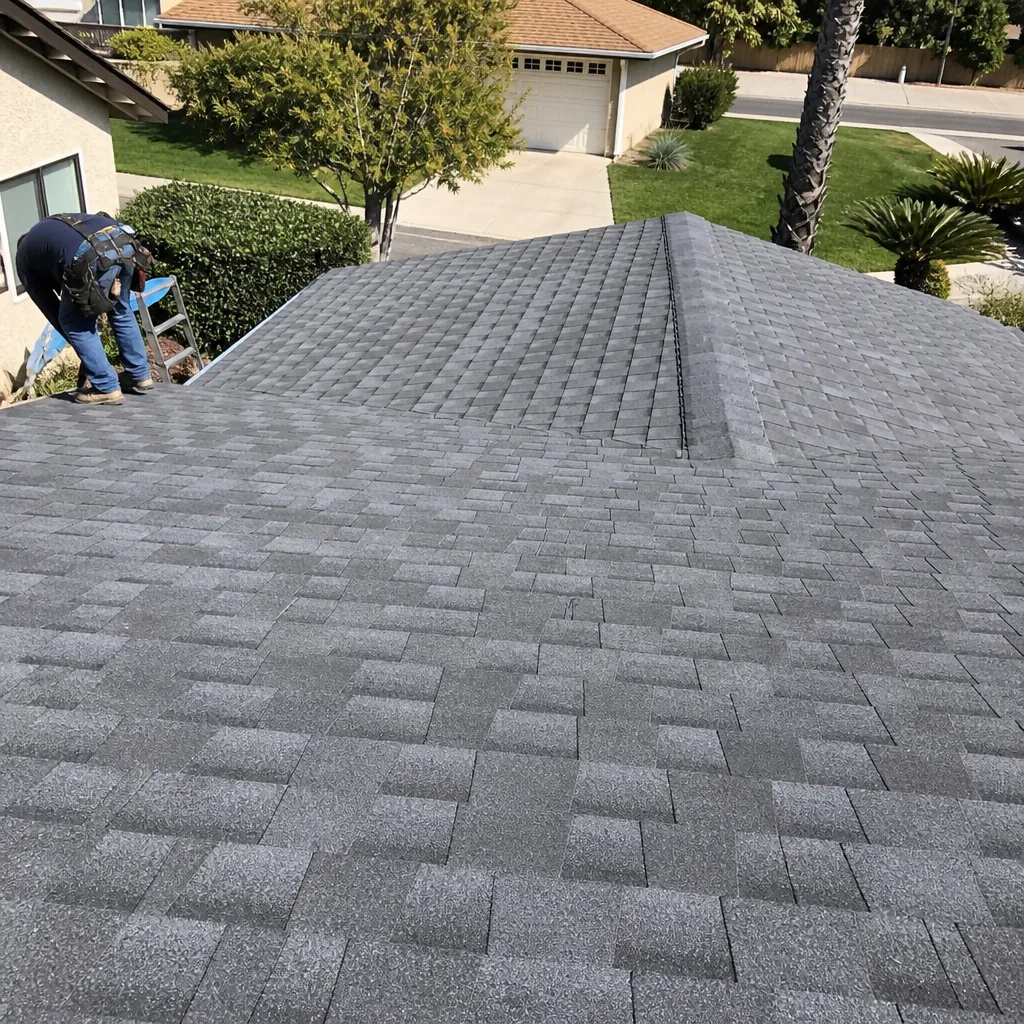 After
After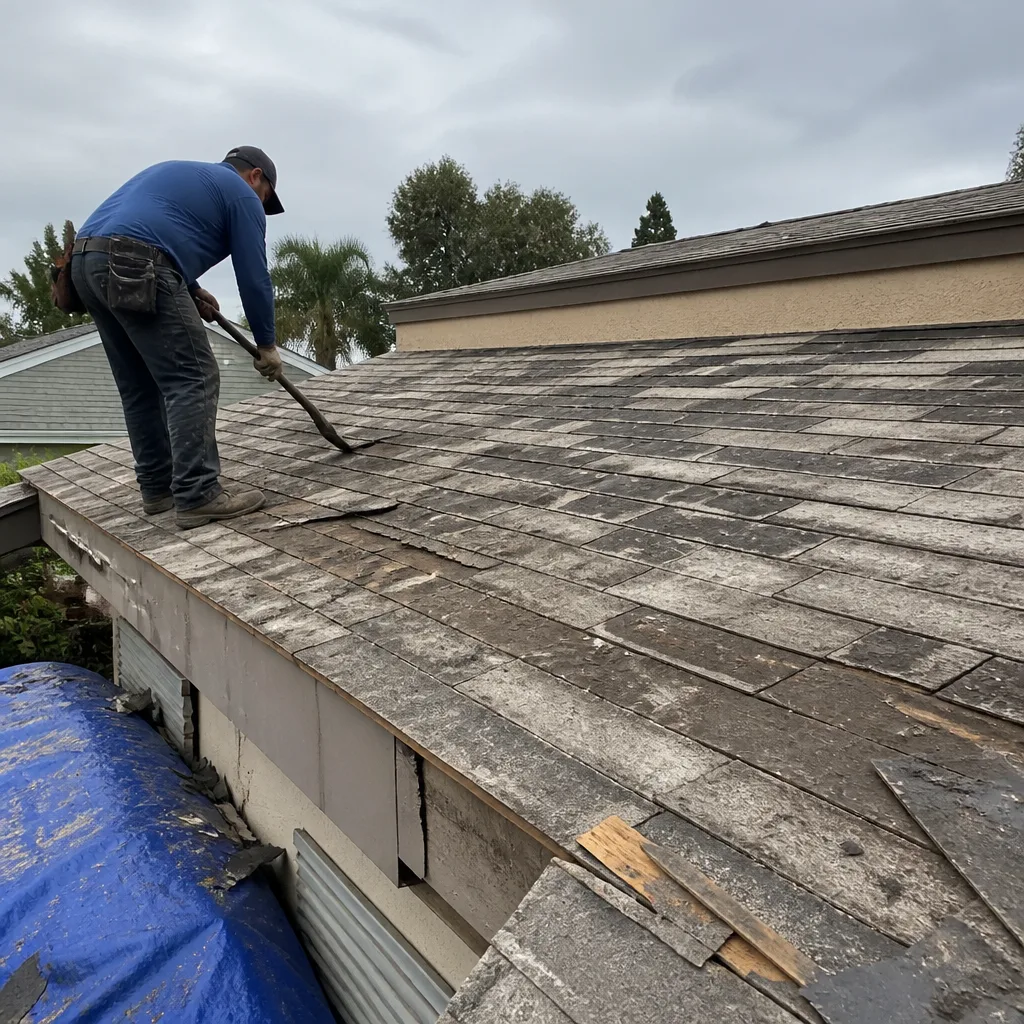 Before
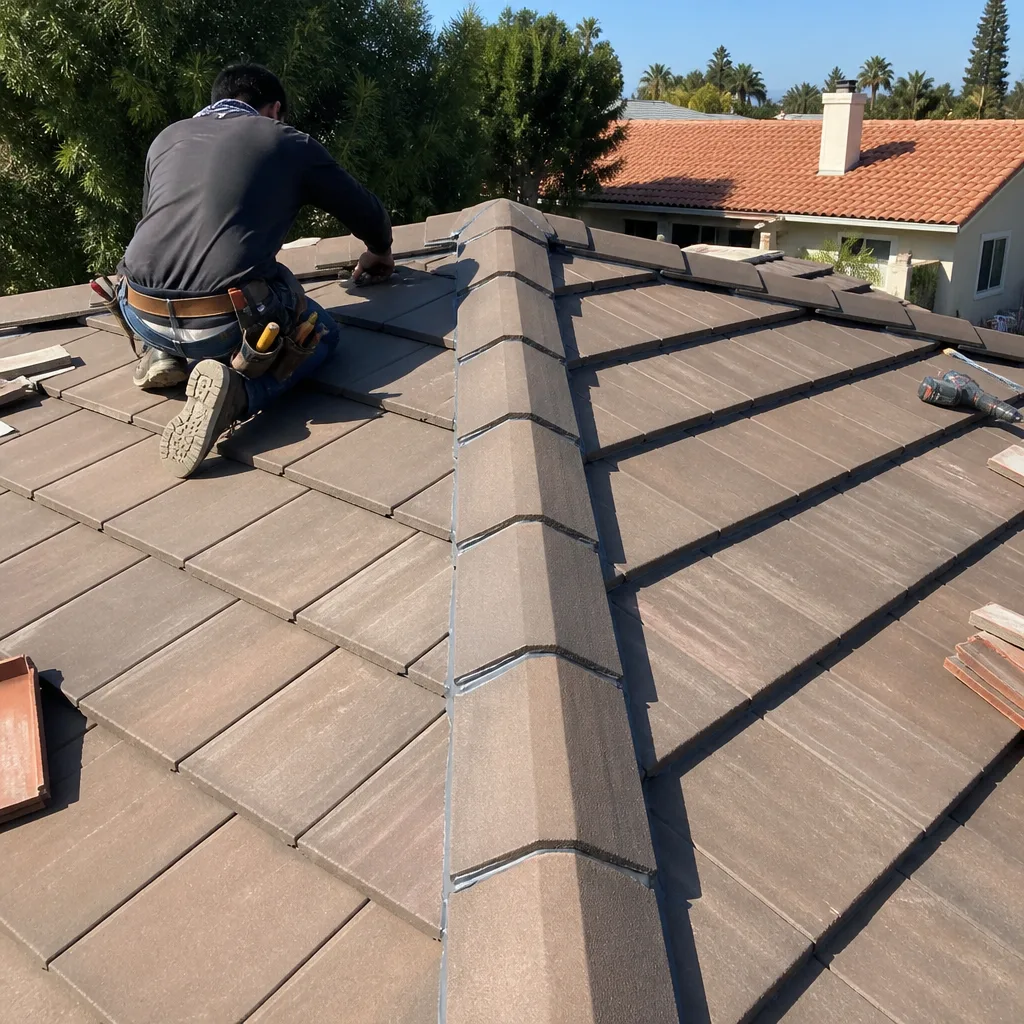 After
After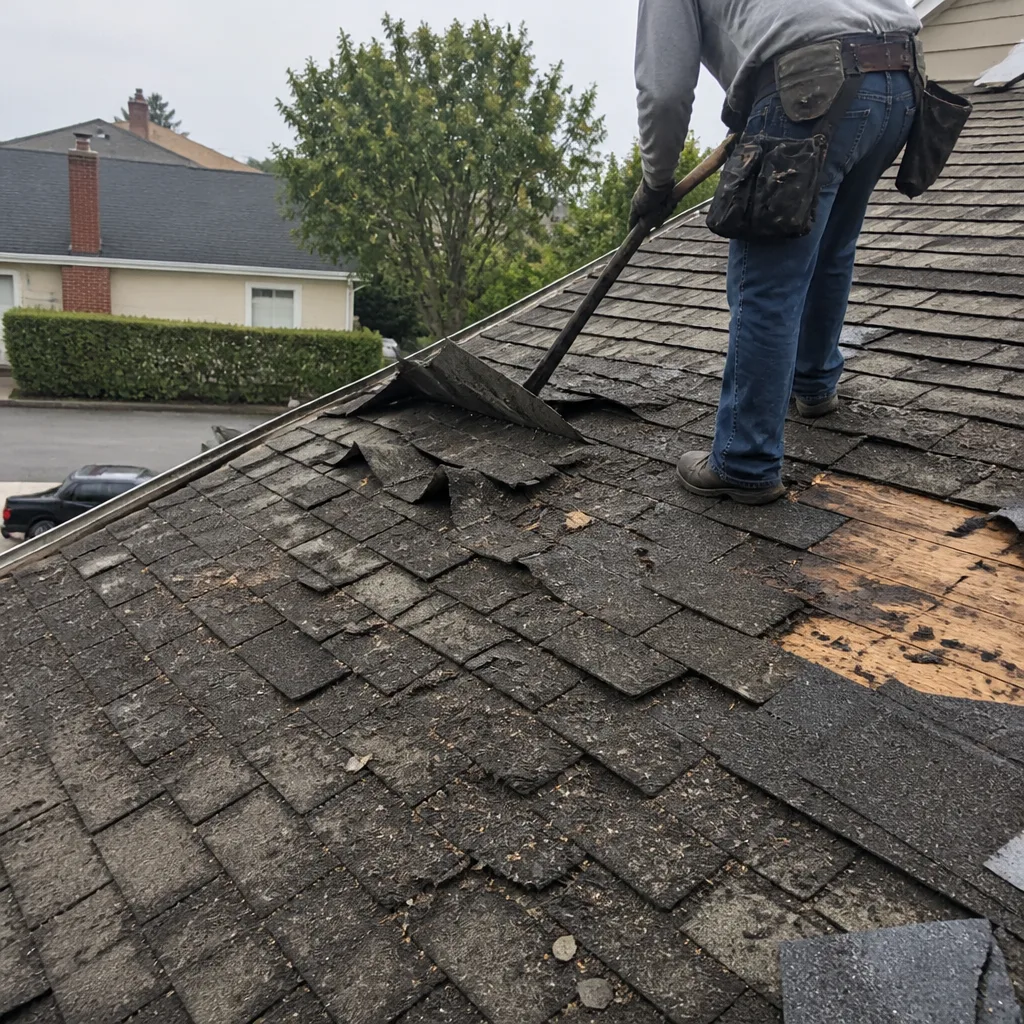 Before
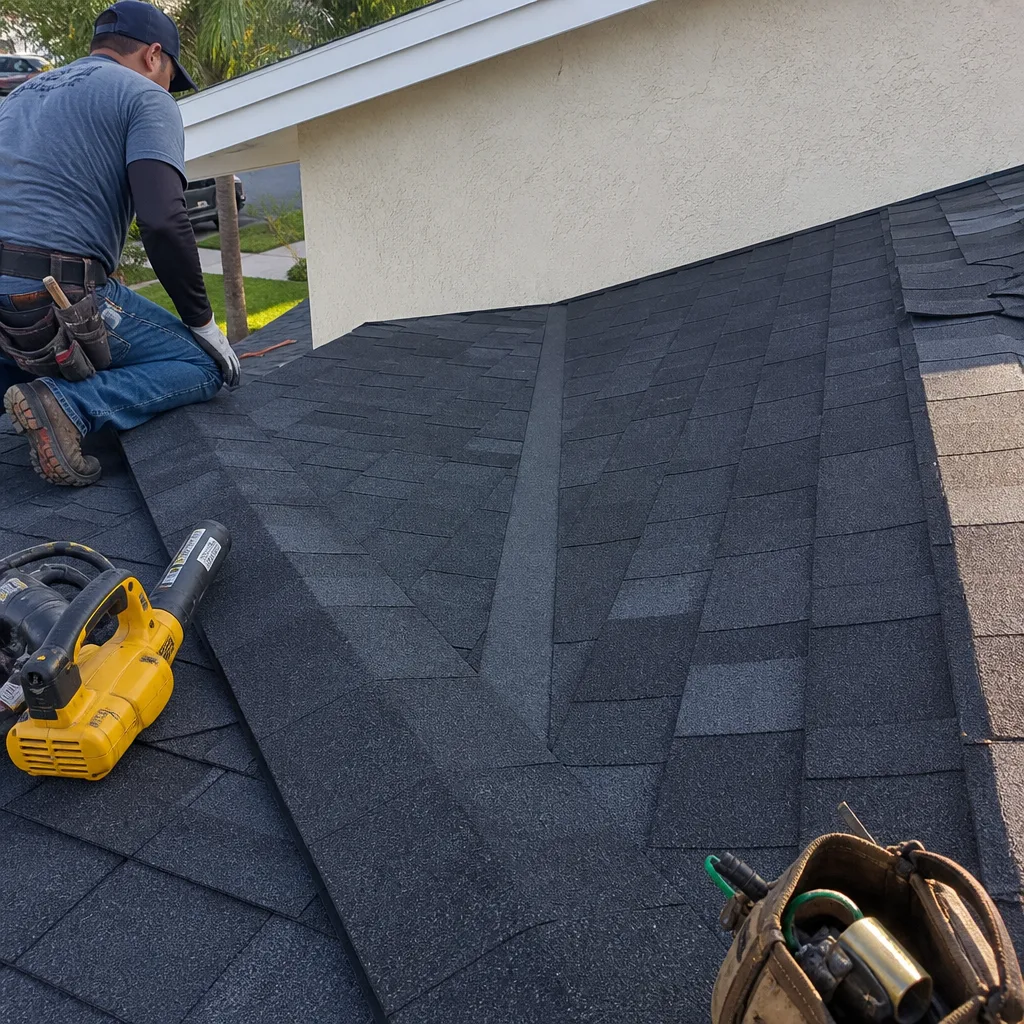 After
AfterWhen to Call a Professional
Call a professional roofing contractor in Orange County if you see water stains on a ceiling, shingles in the yard after a wind event, granules collecting in the gutters, daylight visible from the attic through the roof deck, or tile that has shifted out of place. Any of these signals means the roof’s waterproofing barrier has been compromised, and a delay converts a $500 repair into a $15,000 replacement. Walking a roof yourself is also genuinely dangerous, especially on two-story Orange County homes with steep pitches. The risk isn’t worth the diagnostic savings. Tilehurst Roofing Orange County offers free estimates in Orange County, and a live person answers every call 24 hours a day, seven days a week. Call (559) 295-5445 to schedule yours.
Frequently Asked Questions
A full architectural asphalt shingle replacement in Orange County typically costs between $4.50 and $7.50 per square foot, which places a 2,000-square-foot roof between $9,000 and $15,000 before decking replacement or permit fees. Minor repairs like a small flashing patch run $250 to $600, while a full tile replacement can push past $18 per square foot. The price range depends on the roof’s pitch, the number of stories, the material choice, and the scope details that appear in the contract. Call (559) 295-5445 for an exact quote based on your roof, not on a square-foot table.
Go to the CSLB website at cslb.ca.gov, click “Check a License,” and enter the contractor’s name or license number. Confirm the classification is C-39 Roofing, the status is Active, the business name matches the contract, and workers’ compensation insurance is current. The entire check takes under three minutes, and it should be repeated on the day work begins.
A professional roofing contract includes a fixed price, a change order procedure, a per-sheet decking replacement unit price, a full scope of work listing every component from drip edge to ridge cap, a written workmanship guarantee with a specific term and remedy, and a payment schedule that never exceeds a 10% down payment before work starts. A contract missing any of these items is not ready to sign.
It should not, with one specific exception: rotten roof decking that is discovered after the old shingles come off. That exception is only manageable if the contract already lists a per-sheet replacement price, which means the “change” is simply applying the agreed formula, not negotiating under pressure. At Tilehurst Roofing Orange County, the written price before any work starts is exactly that, and the guarantee is in writing before the crew leaves.
Yes, on every full replacement, because every Orange County city handles permitting a little differently, and the local inspector signs off on the work before the job is considered complete. The permit cost is itemized in the bid, the inspection is scheduled by our team, and no final payment is due until the permit card is signed. Skipping permits saves money now and costs far more at resale.
Most asphalt shingle replacements take two to five days once materials are on site, depending on the roof’s size and pitch, and an additional day or two for the final inspection and sign-off. Tile and metal projects can take longer, especially where decking reinforcement is needed. Weather delays are minimal in Orange County’s dry season, but marine layer moisture can slow underlayment installation in coastal areas.
Look for missing shingles, dents from hail, lifted flashing, granules in the gutters, and water stains on ceilings after a rain. If a door-to-door contractor says your roof has storm damage, get a second opinion from a local Orange County roofer before filing an insurance claim. A local inspection costs nothing and can prevent a claim that raises your rates or a repair you didn’t need. Browse our more guides & resources to stay informed. Call (559) 295-5445 for a free second-opinion assessment if you’re unsure.
The Bottom Line
Hiring a roofing contractor in Orange County is about verification, not vibes. The CSLB license check takes three minutes and eliminates the worst of the market. The contract clauses, the apples-to-apples specs, the written guarantee, the payment schedule, and the permit process are all learnable, repeatable steps. The homeowners who skip them are the ones the CSLB complaint statistics talk about. The homeowners who don’t skip them get a roof that lasts 25 to 50 years and a contractor who answers when they call. That’s the standard we keep at Tilehurst Roofing Orange County, and Roof Repair in Orange County begins the same way: a written price, a written guarantee, and a live person answering every call, around the clock. If you’re ready for a free estimate, call (559) 295-5445. Greg Holloway and the team at Tilehurst Roofing Orange County will walk your roof, explain every line item, and put the whole thing in writing before a single nail goes in.
Written by Greg Holloway, Owner at Tilehurst Roofing Orange County, serving Orange County since 2000.