
Last updated October 17, 2026
 Metal roofing
 Architectural shingles
 Tile roofing
 GAF
GAF Owens Corning
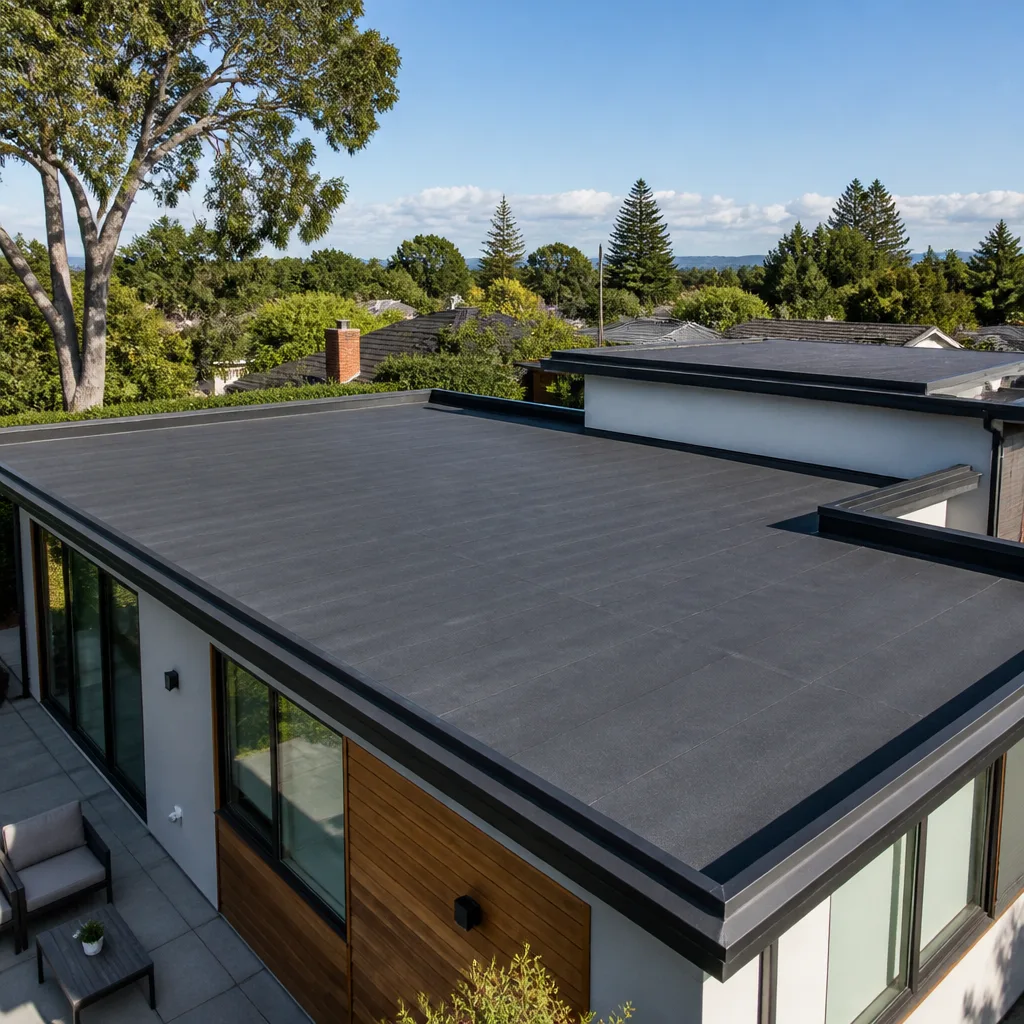 Flat & low-slope
Free roof inspection with deck photos before we talk money - GAF and Owens Corning certified installation
Seasonal Roofing Care for Orange County: Year-Round Homeowner’s Guide
The worst time to call a roofer in Orange County is the week after the first significant rain. Every contractor is booked, tarping emergencies get priority, and your non-emergency leak waits while the damage grows. This guide is built around a simple truth most homeowners learn too late: Orange County doesn’t have four roofing seasons. It has two that matter – the narrow pre-rain prep window in late fall and the post-storm assessment window in early spring. The other two seasons are where problems quietly bake in, and they’re where smart homeowners do their real work. By the time you finish reading, you’ll know exactly what to check each month, what to photograph after a storm, when to schedule work for the best pricing, and how Santa Ana winds create a damage category most roofers never mention. Here is the full Roofing Company in Orange County seasonal playbook.
Quick Answer
Seasonal roofing care in Orange County means doing prep work in September through November before the rains arrive, inspecting within 48 hours after any significant storm, treating summer as your highest UV-stress period rather than an off-season, and checking specific vulnerabilities after every Santa Ana wind event. Most asphalt-shingle repairs run $275 – $650, while neglected seasonal maintenance is what turns a $300 fix into a $14,000 re-roof.
Styles & brands we work with
Table of Contents
- The Pre-Rain Prep Checklist: September Through November
- The 48 Hours After a Heavy Orange County Rain Event
- Why Summer Is Orange County’s Real Roofing Season
- Santa Ana Winds: The Damage Category Most Homeowners Miss
- The Contractor Availability Cycle in Orange County
- Materials That Hold Up in the Orange County Climate
- Season-by-Season Inspection Walkthrough
The Pre-Rain Prep Checklist: September Through November
Orange County gets most of its annual rainfall between December and March, but the prep window opens in September and effectively closes when the first real storm hits. Wait until November and you’re competing with every other homeowner who just watched a forecast. Here’s what we’ve learned from two decades of Orange County roofs: the debris that damages your roof isn’t the same debris that damages roofs in other parts of California. Eucalyptus trees shed bark strips and leaves year-round, and their oil creates a waxy film on shingles that holds moisture. Palm trees drop fronds that can weigh 50 pounds or more when wet, and they don’t land gently.
Your pre-rain checklist, in order of what catches homeowners first:
- Clear all valleys, gutters, and scuppers of eucalyptus bark, palm fronds, and leaf litter. Valleys are the V-shaped channels where two roof planes meet. When they clog, water backs up under the shingles and finds its way inside. In Mission Viejo and Lake Forest, where mature eucalyptus lines many streets, we see clogged valleys every single fall.
- Check the drip edge along the entire perimeter. Drip edge is the metal flashing that hangs slightly over the roof’s edge to direct water into the gutter instead of behind it. If it’s bent, rusted, or pulled away, water runs behind the gutter and into the fascia board. In coastal areas like Huntington Beach and Newport Beach, salt air accelerates this rust.
- Inspect all flashing points: chimneys, skylights, vents, and any place the roof changes direction. Flashing is the metal material that seals the joints where the roof meets a vertical surface. It’s the most common leak source on Orange County homes. Look for cracked sealant, lifted edges, or missing pieces.
- Examine ridge caps for missing, cracked, or lifted shingles. The ridge cap is the row of shingles that runs along the peak of your roof. High winds work these loose before the rain, and then the rain finishes the job. This is a $275 – $450 repair if caught early. If missed, the water travels down the roof deck and you’re looking at structural repair.
- Check attic ventilation from underneath. Go into your attic on a dry day and look for daylight at the ridge, signs of past water staining on the decking, and whether air is actually moving. Poor ventilation doesn’t just reduce energy efficiency; it shortens the life of your shingles by trapping heat and moisture.
- Trim overhanging tree branches. In Orange County, this matters twice: branches scrape granules off shingles during wind, and they drop more debris than a clear roof would ever collect. Keep branches at least three feet from the roof surface.
Most of these checks take under an hour. What takes longer is the repair if you skip them. We’ve rebuilt roof sections in Irvine and Tustin where the original damage was a $200 flashing repair that got ignored through one rainy season.
The 48 Hours After a Heavy Orange County Rain Event
The first significant rain in Orange County always produces the same pattern: a rush of emergency calls, then a quieter second wave of homeowners who noticed a stain on the ceiling three days after the rain stopped. That second wave is usually worse, because water that’s been sitting in the roof assembly has had time to spread. You have a 48-hour window to catch small damage before it compounds, and most of it doesn’t require getting on the roof.
Here’s the step-by-step assessment, in order:
- Walk the interior perimeter of every room during daylight, looking up. Fresh water stains are darker than old ones. If you find one, mark it with a pencil and take a photo. A stain that grows over the next 24 hours is active water; a stain that stays the same size is residual moisture from water that has stopped flowing.
- Photograph everything for insurance, even if you think it’s minor. Insurance adjusters want three things: the original damage, the date of the event, and proof that you acted promptly. Take wide shots that show the room context, then close-ups of the stain or crack. Do this before you wipe anything down. Photos with timestamps are the difference between a covered claim and a denied one.
- Check the attic if you can safely access it. Bring a flashlight and look for wet insulation, water trails on the underside of the decking, and any daylight coming through. Wet insulation holds water against the decking and promotes mold. In Orange County’s mild winters, mold moves fast once moisture is present.
- Look at the exterior from ground level with binoculars if you have them. Check for lifted shingles, missing granules (which show as dark patches on lighter shingles), and debris dams that formed during the storm. Pay special attention to the area around vents, where water accumulates during heavy rain.
- Call a roofer if you find anything, but know the difference between emergency and scheduled work. Active water intrusion during a storm is an emergency that warrants tarping. A small stain from a pin-sized flashing gap that has stopped growing can wait a few days for a scheduled repair. If you’re not sure which category you’re in, a good company will tell you honestly and schedule accordingly. At Roof Repair in Orange County every job starts with a written price before work begins, so you know the cost before deciding emergency or scheduled.
The photograph step matters more in Orange County than in places with predictable storm seasons. Insurance companies here see a high volume of “wind and rain” claims after every Santa Ana event, and they look for reasons to categorize damage as pre-existing. Good photos with dates are your protection.
Why Summer Is Orange County’s Real Roofing Season
Most homeowners think of summer as roofing’s slow season. The opposite is true for your roof. Orange County averages 280+ sunny days per year, and July and August bring sustained UV exposure that ages materials faster than any winter rain. Asphalt shingles lose granules under constant UV. The oils in the asphalt dry out. Seams in single-ply membranes expand and contract with the daily temperature swing. Tile roof underlayment, which actually does most of the waterproofing work on a tile roof, dries and becomes brittle in sustained heat.
We’ve seen it across every Orange County neighborhood: a roof that looked fine in June shows its real age by September. The UV stress hits coastal and inland areas differently, too. In coastal cities like Laguna Niguel and San Clemente, the marine layer moderates temperature but brings salt air. In inland areas like Anaheim Hills and Yorba Linda, the temperature swings are wider, which means more thermal expansion and contraction at flashing points.
Here’s what belongs in July, not January:
- Roof washing and moss treatment (coastal areas only). In shaded canyon areas and coastal microclimates, moss and algae grow through the damp season and die into a crust by summer. That crust holds moisture against shingles. It’s the most overlooked summer task in Orange County.
- Flashing reseal and UV inspection. Sealant breaks down in UV faster than most materials. Summer is when you check every penetration point – vent pipes, skylights, attic fans – for cracking or shrinkage in the sealant. This is the most common $215 – $385 repair we do, and it’s the cheapest fix with the highest return in leak prevention.
- Attic ventilation check and upgrade. When your attic hits 140 degrees in August, it’s baking the shingles from below as much as the sun is from above. Proper ridge and soffit ventilation extends the life of your roof by years. If your attic feels like a sauna when you open the hatch, you don’t have enough airflow.
- Gutter and downspout dry-run. Summer is the time to run water through your gutters and downspouts and watch where it goes. If it’s not flowing out at least three feet from the foundation, you’ll have drainage problems the first time it rains. Catching this in August means you can fix it before the rainy season.
Scheduling repairs in the summer is actually the smartest move an Orange County homeowner can make. You get the contractor’s attention before the rain-driven rush, you can schedule at a time that works for you, and the work gets done in dry conditions that allow proper material curing.
Santa Ana Winds: The Damage Category Most Homeowners Miss
Rain damage is what everyone watches for. Santa Ana wind damage is what most Orange County roofs actually experience first. Santa Ana events happen primarily from September through April, with peak winds in October and November. The winds come from the northeast, gust 40 to 60 miles per hour in exposed areas, and carry fine dust and sand that abrades roofing surfaces in a way rain never does.
The specific vulnerabilities to check after every significant Santa Ana event:
- Lifted shingles at the windward edges. Santa Ana winds hit the northeast-facing roof plane hardest. Shingles at the edges and along the rake (the sloped edge of the roof) take the most lift. Check these areas first, from ground level if possible. A lifted shingle is a leak waiting for the next rain.
- Granule loss on the windward side. The sand and dust carried by Santa Ana winds acts like fine-grit sandpaper on asphalt shingles. You’ll see granule accumulation in gutters on the windward side of the house. Significant granule loss means the shingles have lost UV protection and will fail early.
- Displaced or broken tiles on concrete and clay tile roofs. Tile roofs aren’t immune to wind. The underlayment does the waterproofing, but broken or displaced tiles expose the underlayment to direct sun, which accelerates breakdown. A missing tile is a future leak, even if there’s no active water intrusion.
- Flashing that has separated from the roof surface. The repeated oscillation of wind against flashing points loosens fasteners and breaks sealant bonds over time. After a major wind event, look for flashing that appears lifted, tilted, or no longer flush against the roof.
- Debris impact points. Santa Ana winds carry branches, palm fronds, and other debris. Check for impact marks, cracked shingles, or broken tiles where something hit. The impact point is the obvious damage; what comes next is the water that finds its way into the crack.
After a multi-day Santa Ana event, we recommend a full roof inspection even if you don’t see anything from the ground. Wind damage is often subtle, and it compounds. A lifted shingle from October becomes a full leak by January’s first sustained rain.
The Contractor Availability Cycle in Orange County
Roofing in Orange County follows a predictable availability cycle, and knowing it saves you money and scheduling delays. The cycle is driven by rain, which creates emergency demand, and by summer, which creates the opposite.
The cycle looks like this:
- November through early December: The pre-rain rush. Homeowners who did their fall checklist call for repairs. Wait times start climbing. Pricing firms up as demand rises.
- Late December through March: Emergency-driven availability. The first significant storm triggers emergency tarping calls that take precedence over scheduled work. Non-emergency repairs wait. Contractors work around weather windows, which means more rescheduling.
- April through June: The post-storm assessment window. Smart homeowners get inspections done now, before summer heat bakes in whatever the rain exposed. Contractors still have decent availability, and you can schedule on your timeline, not the weather’s.
- July through September: The best scheduling window in Orange County. Most homeowners aren’t thinking about their roofs. Contractors have open capacity. You can schedule maintenance and repairs at the best pricing and with the most flexible scheduling of the entire year.
Here’s the counterintuitive part: the money you save by scheduling in July and August comes from two places. First, you avoid the emergency-priority surcharge that comes with work done during rain events. Second, you catch problems before they become comprehensive failures. A flashing reseal in July costs $215 – $385. The same flashing ignored until January becomes a $700 – $1,200 repair with ceiling damage and mold mitigation.
If you need a full Roof Replacement in Orange County, the same logic applies. Late spring through early fall offers the driest installation conditions, which means proper material curing, no weather delays, and more predictable pricing.
Materials That Hold Up in the Orange County Climate
Orange County’s climate is unusual for roofing: high UV year-round, dry heat in summer, concentrated rain in winter, salt air on the coast, and wind-driven abrasion in the fall. Materials respond differently to each stress, and matching the material to the microclimate matters more than most homeowners expect.
Asphalt shingles remain the most common roofing material in Orange County because they’re affordable and widely available. Modern options like GAF Timberline and CertainTeed Landmark lines are built with UV-stabilized granules that resist the Southern California sun better than older formulations. In inland areas with wider temperature swings, we often recommend higher-grade shingles with better thermal stability. Asphalt shingles typically last 20 to 30 years in Orange County’s climate, with coastal salt air shaving a few years off that range.
Concrete and clay tile dominate the higher-end Orange County market, particularly in Spanish and Mediterranean architecture from San Juan Capistrano to Yorba Linda. Boral is a major manufacturer here, and their concrete tile products hold up exceptionally well against UV and Santa Ana wind abrasion. The critical component on a tile roof isn’t the tile itself; it’s the underlayment beneath the tile. Underlayment breaks down in 20 to 25 years under Orange County sun, while the tile can last 50 years or more. This means many tile roofs need underlayment replacement long before the tile fails.
Metal roofing is gaining ground in Orange County, and manufacturers like Atlas and Tamko have both entered the space with standing seam systems designed for residential use. Metal reflects more UV than asphalt, doesn’t hold heat the same way, and handles Santa Ana winds well when properly installed. The tradeoff is cost, typically 2 to 3 times asphalt shingle pricing, and the need for a contractor with specific metal installation experience.
Whatever material you have or choose, the installation details matter more than the brand name. Proper flashing, correct fastener patterns, and ventilation are what determine whether a roof lasts 15 years or 30 years in this climate. We’ve seen identical shingles installed on identical homes in the same neighborhood, where the difference in installation quality determined a decade of service life.
Season-by-Season Inspection Walkthrough
Here’s the full annual cycle, compressed into a walkthrough you can follow in Orange County. Each season has a specific focus, not a generic “check your roof” instruction.
Fall (September through November): Prep Before the Rain
- Full debris removal from valleys, gutters, and scuppers
- Flashing inspection at every penetration point
- Drip edge check around the entire perimeter
- Ridge cap inspection for lifting or cracking
- Attic ventilation check from underneath
- Tree branch trimming to maintain three feet of clearance
- Sealant check on all vent pipes, skylights, and attic fans
Winter (December through March): Watch and Respond
- After each significant rain, interior ceiling and wall check for new stains
- Attic moisture check within 48 hours of rain events
- Ground-level exterior inspection for lifted or missing shingles
- Gutter check during rain: water should flow, not spill over or back up
- After Santa Ana events, windward-side inspection for lift and granule loss
- Photograph any new damage with timestamps for insurance
Spring (April through June): Assess and Repair
- Full roof inspection to catch everything the winter exposed
- Schedule any needed repairs before summer heat bakes in the damage
- Check for moss and algae growth in coastal and canyon areas
- Inspect south-facing slopes for UV damage, especially on older asphalt shingles
- Evaluate gutter and downspout function for the coming dry season
Summer (July through August): Prevent and Protect
- Schedule non-emergency repairs when contractor availability is highest
- Flashing reseal and UV inspection while dry conditions allow proper curing
- Attic ventilation evaluation during peak heat
- Roof washing and moss treatment in affected coastal areas
- Dry-run gutter and downspout flow test before the rains return
- Start planning any fall pre-rain maintenance
Common Mistakes to Avoid
- Waiting until the first rain to schedule anything. In Orange County, the first significant rain triggers a contractor rush that means your non-emergency work waits behind emergency tarping calls. September and October are your scheduling months.
- Ignoring your attic because it’s not a living space. The attic is where roof problems reveal themselves first: water staining, daylight through the decking, and trapped heat. We’ve caught damage in attics that homeowners would have missed for years.
- Treating a broken tile as cosmetic. On a tile roof, the tile protects the underlayment, and the underlayment does the waterproofing. A broken tile exposes the underlayment to UV, which breaks it down quickly. Replace broken tiles promptly.
- Cleaning gutters but forgetting the downspouts. A clear gutter draining into a clogged downspout is worse than a clogged gutter because it concentrates water at the roofline. Check the full drainage path.
- Not photographing storm damage immediately. Insurance claims live and die on documentation. Photos taken three days after a storm with timestamps are worth more than any verbal description you’ll give an adjuster.
- Assuming a newer roof doesn’t need inspection. The first two years of any roof are when installation defects reveal themselves. Newer roofs need inspection precisely because problems caught early are installation issues, often covered by the contractor’s workmanship warranty.
- Ignoring Santa Ana wind damage because there’s no rain. Wind damage without rain is still damage. Lifted shingles, broken flashing seals, and granule loss from wind abrasion all create the conditions for water intrusion the next time it rains.
See the difference
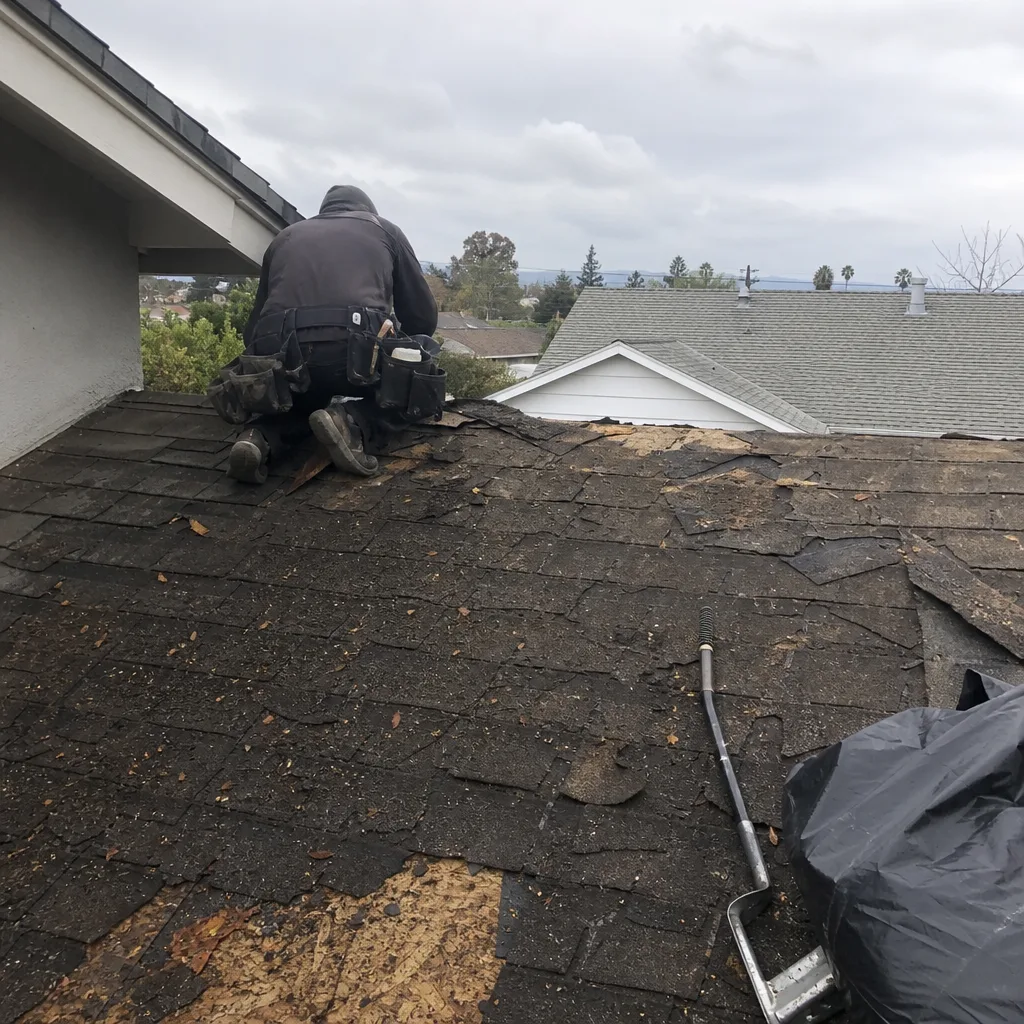 Before
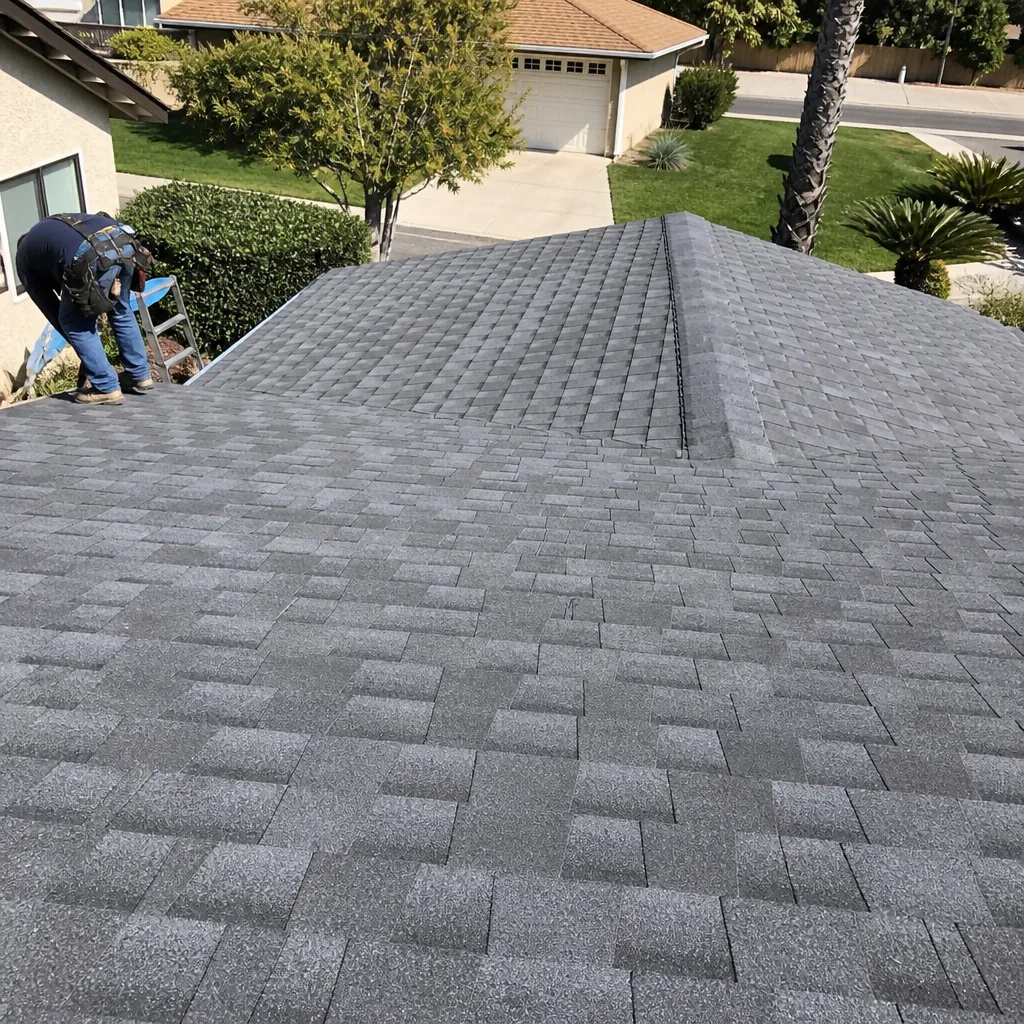 After
After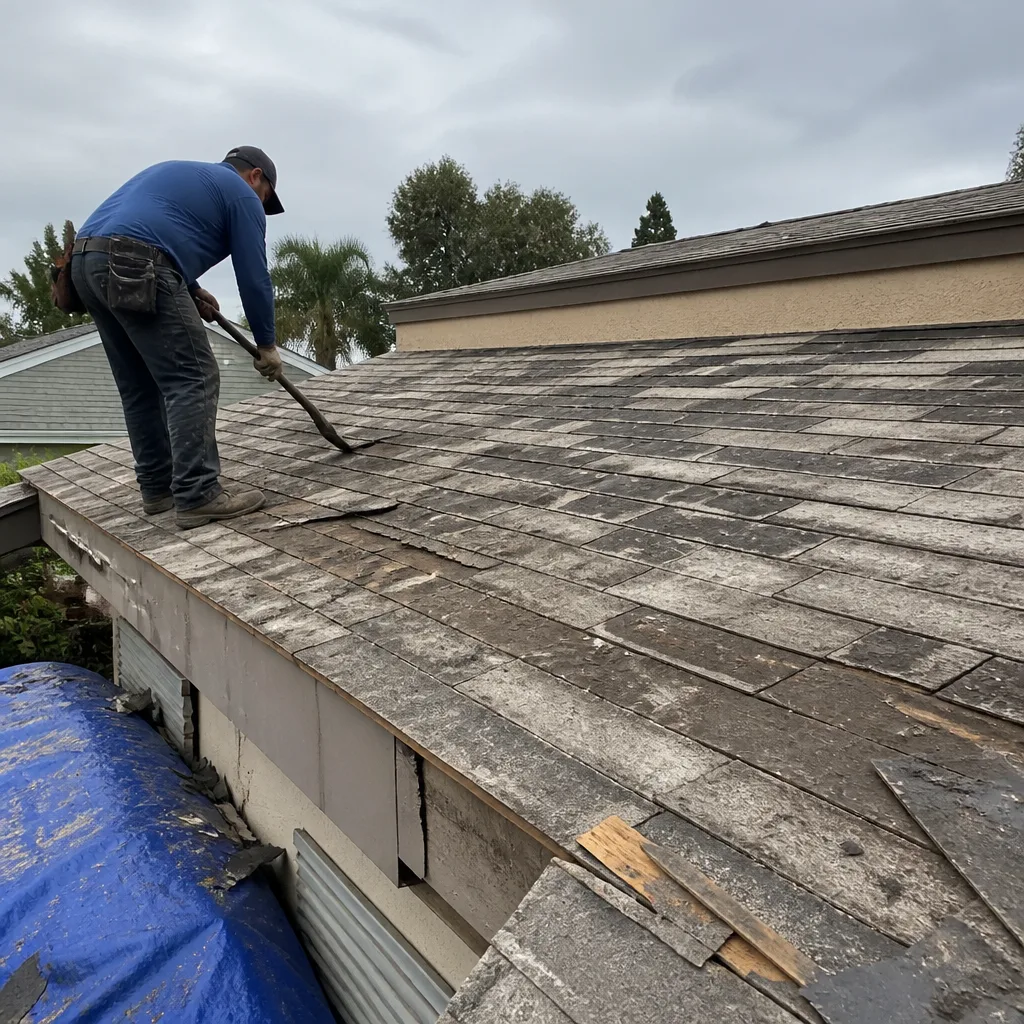 Before
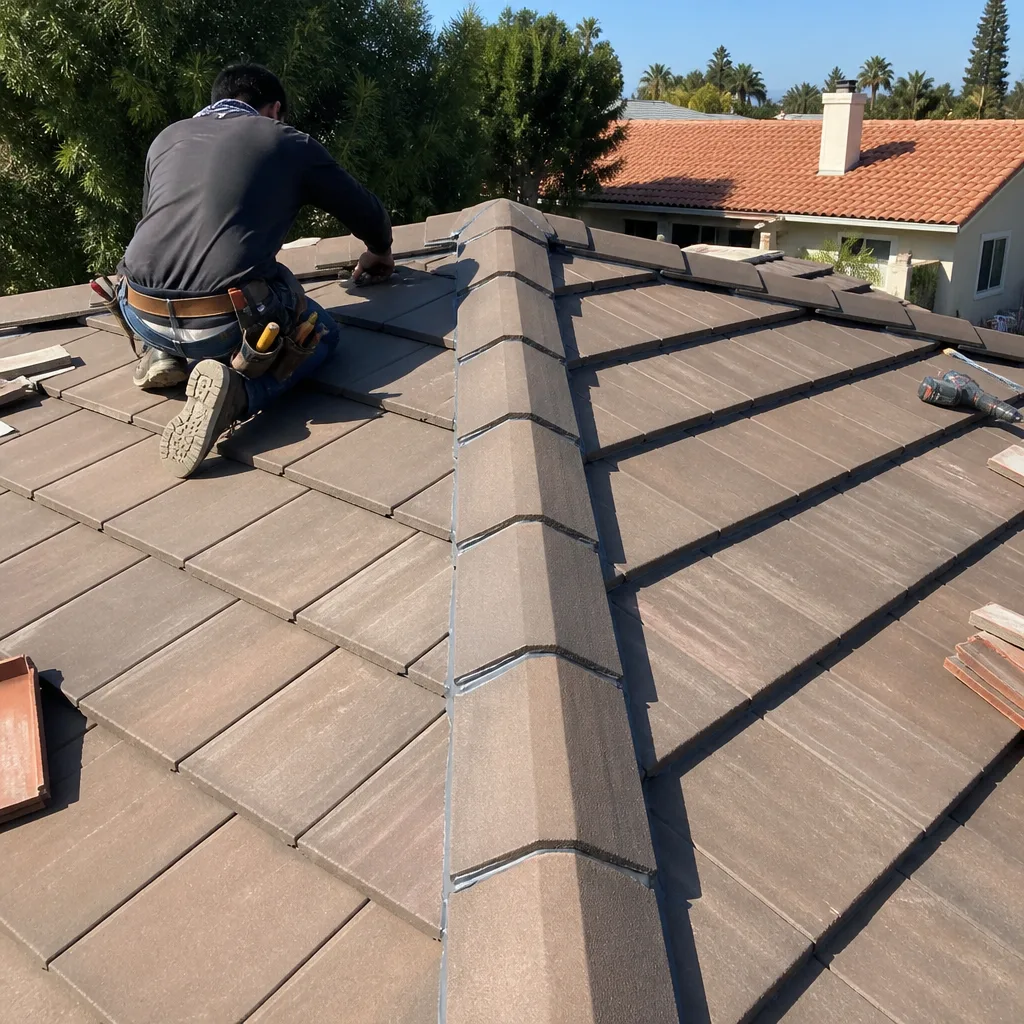 After
After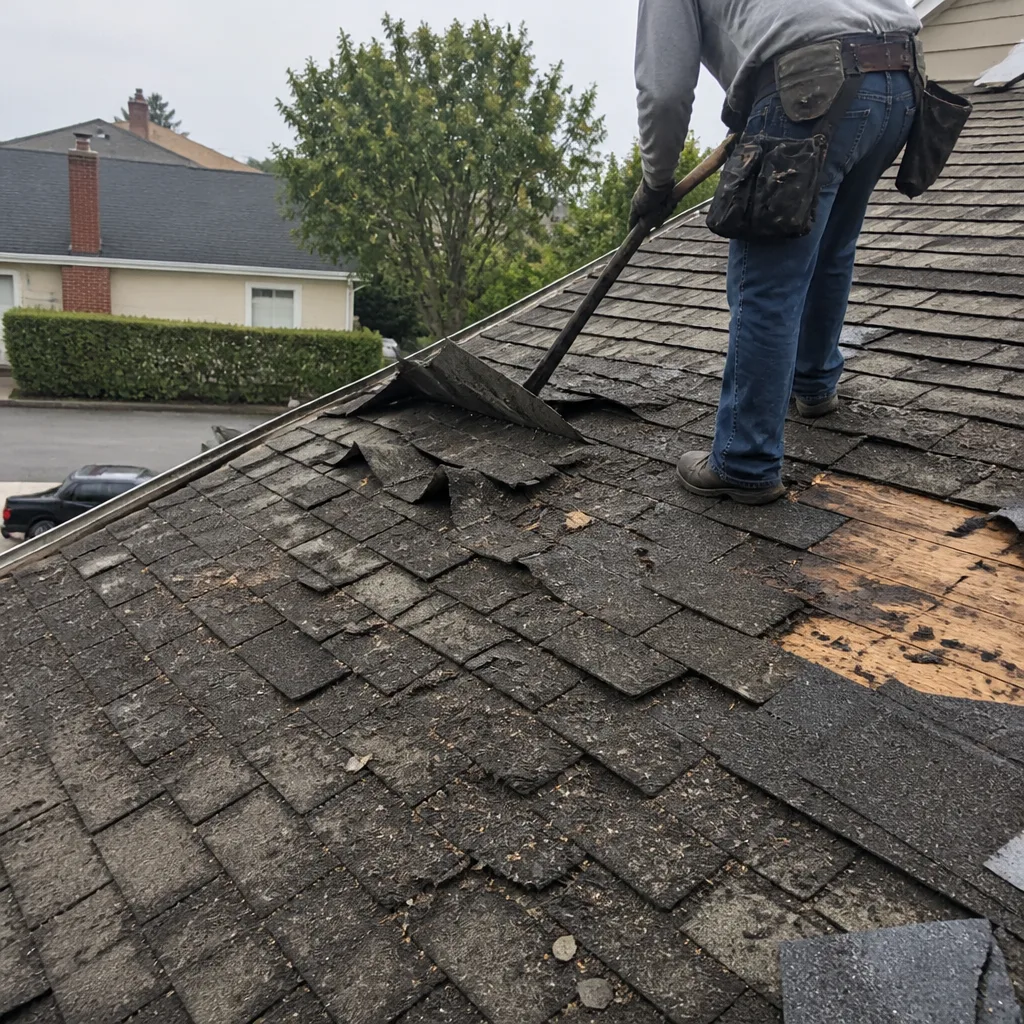 Before
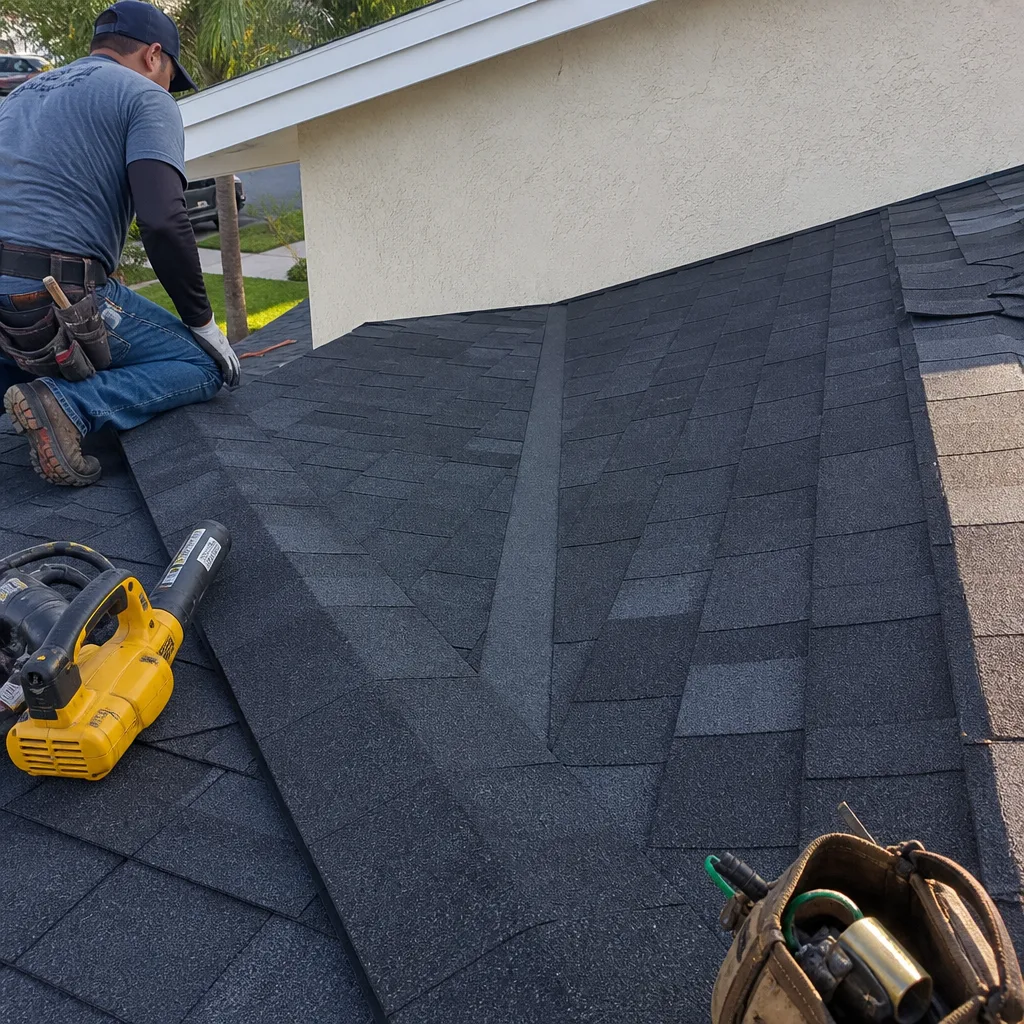 After
AfterWhen to Call a Professional
Call a roofer when you see active water intrusion, lifted or missing shingles after a storm, broken or displaced tiles, flashing that has separated from the roof surface, or any stain that grows over a 24 to 48 hour period. For help choosing the right professional, see our guide on how to hire a roofing contractor in Orange County. These are signs that water has already found its way in or that it will with the next rain. You should also call for an inspection if your roof is over 15 years old and hasn’t been professionally evaluated in the last three years, or if you’ve experienced a significant Santa Ana wind event with visible debris impact. Tilehurst Roofing Orange County offers free estimates in Orange County. Call (559) 295-5445 to schedule yours, and you’ll have a written price in hand before any work starts.
Frequently Asked Questions
Once a year is the baseline for Orange County, ideally in the fall before the rainy season begins. Homes with mature vegetation nearby, exposed windward slopes, or roofs over 15 years old benefit from a second inspection in the spring. If you experience a significant Santa Ana event or a heavy rain with debris, add an inspection after that event regardless of when your last one occurred.
Most seasonal maintenance tasks range from $150 to $650 depending on what’s needed. A full debris removal and gutter cleaning runs $150 to $300 for most single-family homes. Flashing reseal at penetration points runs $215 to $385. Ridge cap repair is $275 to $450. Full inspections are free with Tilehurst Roofing Orange County, and every repair comes with a written price before work begins. Call (559) 295-5445 for an exact quote.
Yes, and you should be doing this regularly. Walk the perimeter of your home and use binoculars if you have them to check for lifted shingles, missing granules (dark patches), visible flashing problems, and debris accumulation. If you need to get on the roof itself, that’s when we recommend a professional. Falls from roofs are the leading cause of homeowner injury during DIY inspection, and a professional carries the equipment and insurance to do it safely. Read our DIY vs Professional Roofing guide to weigh your options.
Flashing failure at penetration points: vent pipes, chimneys, skylights, and attic fans. The combination of UV breakdown of sealant and thermal expansion during temperature swings works flashing loose over time. It’s also the cheapest problem to fix when caught early and one of the most expensive when left to leak into the roof assembly and ceiling.
Asphalt shingle roofs typically last 20 to 30 years in Orange County. Concrete and clay tile underlayment lasts 20 to 25 years even though the tile itself may last 50 or more; that’s why underlayment replacement is the primary tile roof service we perform. Metal roofing installed correctly should last 40-plus years. These ranges assume proper installation, adequate ventilation, and regular maintenance.
Most cities in Orange County require permits for full roof replacements and significant structural repairs. Minor repairs under a defined square footage threshold typically don’t require permits, but the threshold varies by city. A licensed contractor will know what your specific city requires and will pull permits when needed. This is one of the reasons to work with a local contractor who does regular work in your city, not someone driving into the county from outside.
Most homeowners policies in Orange County cover wind damage, including Santa Ana events, and rain damage that results from a covered wind event. The key is documentation: photograph damage immediately after the event, note the date, and get a professional assessment before making any repairs. Repairs made before an adjuster sees the damage can complicate your claim, so document first, then call your roofer and your insurance company.
The Bottom Line
Seasonal roofing care in Orange County is a calendar discipline, not a reaction to problems. Prep in September through November, assess within 48 hours of storms, use summer’s UV window for prevention and scheduling advantage, and check specific vulnerabilities after every Santa Ana event. The homeowners who follow this cycle catch $250 flashing repairs before they become $12,000 structural failures. They schedule work when contractors have availability, not when weather forces their hand. And they keep photographs and documentation that protect their insurance claims. The specific seasons matter. The narrow windows matter. And the two seasons most homeowners waste are where the real savings live. For the full picture, see The Complete Guide to Roofing in Orange County.
Tilehurst Roofing Orange County home page has more on the Kingswell Guarantee and what a written price before work begins looks like in practice. Call (559) 295-5445 to schedule your free seasonal inspection, and you’ll have a clear picture of your roof’s condition and a written price for any recommended work before you decide anything.
Written by Greg Holloway, Owner at Tilehurst Roofing Orange County, serving Orange County since 2000. Browse more guides & resources on our blog.