
Last updated October 17, 2026
 Metal roofing
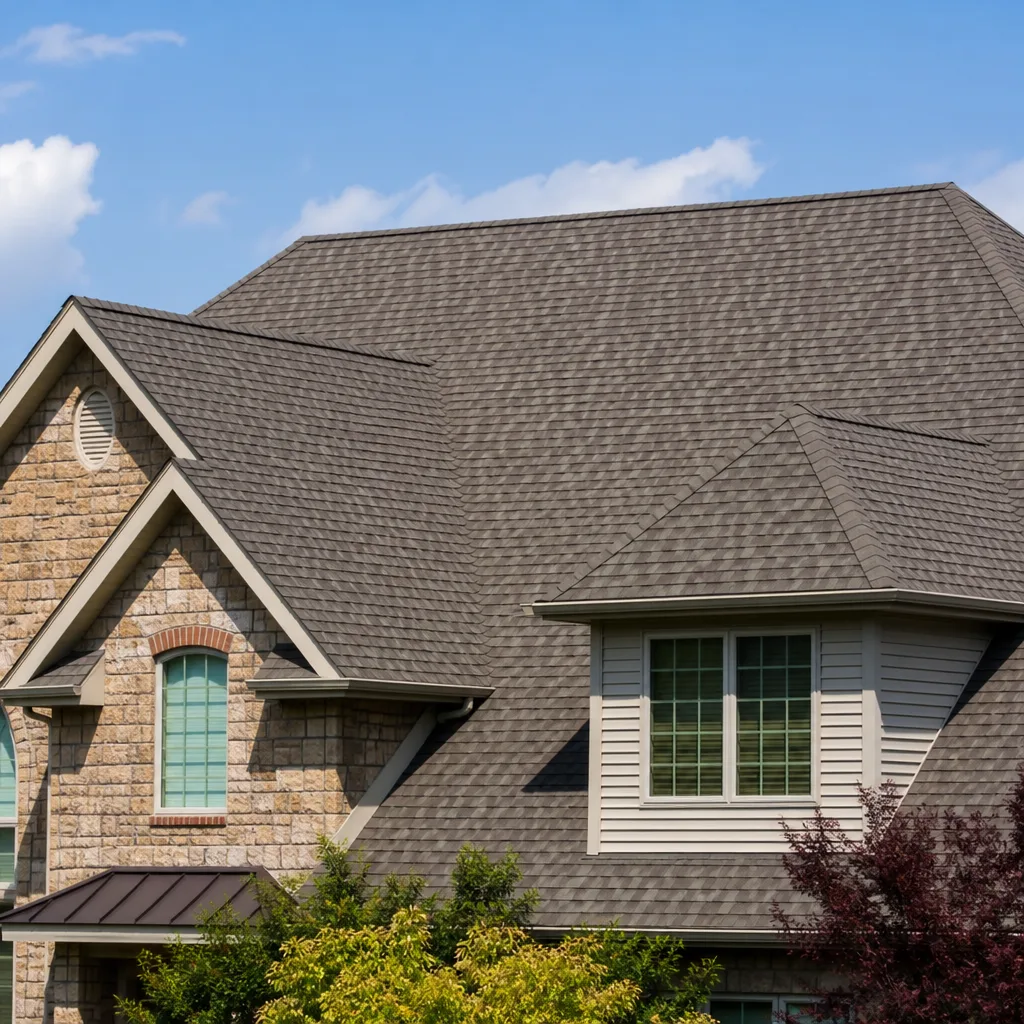 Architectural shingles
 Tile roofing
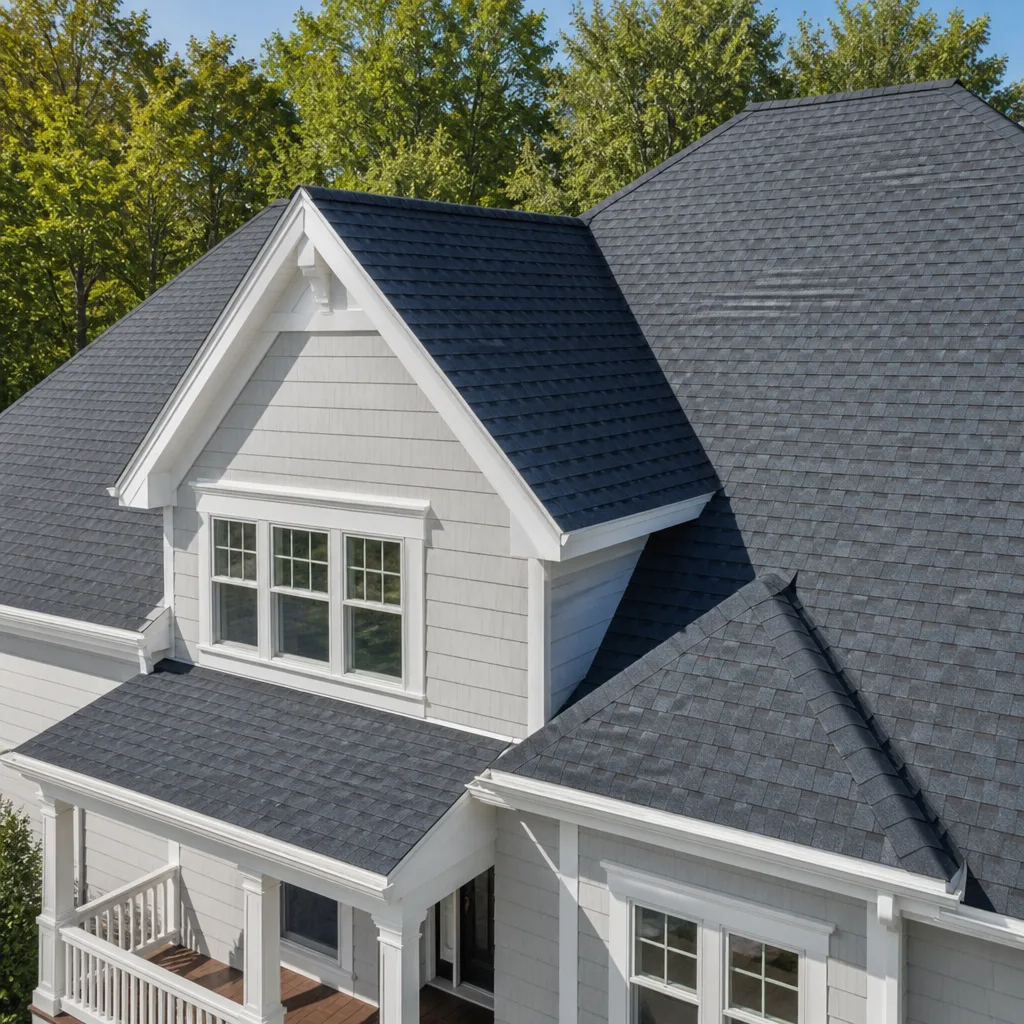 GAF
GAF Owens Corning
 Flat & low-slope
Free roof inspection with deck photos before we talk money - GAF and Owens Corning certified installation
DIY vs Professional Roofing: The Orange County Homeowner’s Decision Guide
A homeowner in California can legally perform roofing work on their own home. But doing it without a permit on a job that requires one creates a title defect that can cloud a sale even if the roof itself is perfect. This guide walks through the real decision points for Orange County homeowners: the legal boundaries, the true cost math, which tasks are genuinely safe to attempt, and which ones quietly become insurance and resale problems down the road.
Quick Answer
Most Orange County homeowners should hire a professional roofer for anything beyond cleaning gutters or replacing a single visible shingle; our How to Hire a Roofing Contractor in Orange County: A Step-by-Step Guide walks you through finding the right one. The reason isn’t skill. It’s that unpermitted work, missed HOA approvals, or DIY repairs without documentation can damage your insurance position and complicate a future home sale, even when the work itself holds up fine.
Styles & brands we work with
Table of Contents
- What California Law Actually Allows Homeowners to Do
- HOA Rules in Orange County: The Approval Layer DIY Guides Skip
- The True Cost of DIY Roofing in Orange County
- Which Roofing Tasks Are Reasonable DIY Candidates
- Which Tasks You Should Leave to a Licensed Roofer
- How a Failed DIY Repair Affects Your Insurance Claim
- Permits, Inspections, and Title Defects in Orange County
- Material Selection: What DIY Projects Miss
What California Law Actually Allows Homeowners to Do
California Business and Professions Code Section 7044 exempts homeowners from contractor licensing requirements when they work on their own primary residence. You can legally repair or replace your own roof without holding a C-39 roofing contractor license. You can even sell the home afterward, provided the work was done with proper permits where required.
But “legal to do” and “legal to do without consequences” are different things. The exemption covers the act of working. It does not exempt you from the building code. It does not exempt you from permit requirements. And it does not exempt you from the disclosure obligations that kick in when you sell.
Here’s where Orange County homeowners get tripped up:
- Owner-builder status is real, but it carries liability. If you act as an owner-builder, California requires you to disclose that status to any buyer within one year of the work. That disclosure tends to invite scrutiny from home inspectors and lenders.
- The license exemption applies to the person, not the job. The moment you hire a helper who is not your employee and that person performs roofing labor for compensation, they need a C-39 license. Paying a handyman $25 an hour to help you nail shingles is technically a violation if they’re not licensed for roofing.
- Insurance on the property does not automatically cover your DIY work. If you are injured working on your own roof, your health insurance covers you. But your homeowners policy typically does not cover damage you cause to your own home through faulty workmanship. A pro carries general liability and workers’ compensation. You carry the risk.
In our experience at Tilehurst Roofing Orange County home, the homeowners who call us after a DIY attempt are rarely calling about the quality of the work. They’re calling because something downstream surfaced: a failed inspection, a lender question, an insurance adjuster asking for paperwork that doesn’t exist, or an HOA fine letter. The roofing itself is often fine. The paperwork is what creates the problem.
HOA Rules in Orange County: The Approval Layer DIY Guides Skip
About 40% of Orange County housing stock sits inside a homeowners association. If you live in Irvine, Mission Viejo, Aliso Viejo, Lake Forest, Rancho Santa Margarita, Ladera Ranch, or a large portion of Anaheim Hills and Yorba Linda, you almost certainly have an HOA with architectural control.
That layer applies whether you do the work yourself or hire a professional. Most OC HOAs require written architectural approval before any roof work that changes the appearance of the home: color, material type, profile, or sheen. Even a like-for-like replacement often needs sign-off because the HOA wants to verify the new material matches the original spec from the community’s design guidelines.
What makes this a DIY-versus-professional decision point:
- HOAs process applications at their own pace. Some communities have architectural committees that meet monthly. If you’re DIYing, that delay is yours to manage. Professional roofers in Orange County handle HOA submittals routinely because they work in the same communities repeatedly.
- Non-compliance has teeth. In many OC HOAs, unapproved roof changes trigger a notice to correct, followed by daily fines. Some associations can force restoration of the previous appearance at the homeowner’s expense. That’s a financial risk that exists independent of roof quality.
- HOAs want licensed contractor credentials. Many Orange County associations ask for the contractor’s license number, insurance certificates, and warranty documentation as part of the approval package. A DIY homeowner files as owner-builder, which some boards scrutinize more heavily.
The practical takeaway: before you buy a single bundle of shingles, check your CC&Rs and architectural guidelines. If the answer is “HOA approval required,” factor two to six weeks of process time into your plan regardless of who does the work.
The True Cost of DIY Roofing in Orange County
Most DIY cost comparisons are dishonest in one direction or the other. They either quote materials-only retail prices and declare DIY the winner, or they quote a full retail replacement and ignore what a competent roofer actually charges in the Orange County market. Here’s an honest breakdown for a typical 1,800-square-foot single-story home in Orange County with a straightforward 6/12 asphalt shingle roof.
| Cost Item | DIY Estimate | Professional Estimate |
|---|---|---|
| Asphalt shingles (30 squares, architectural) | $2,700 – $3,400 | Included in bid |
| Underlayment, drip edge, ridge cap, fasteners, sealant | $900 – $1,200 | Included in bid |
| Permit fees (varies by city) | $250 – $600 | Included in bid |
| Dumpster rental and disposal fees | $450 – $700 | Included in bid |
| Equipment rental (nail guns, compressor, ladder jacks, safety harness) | $300 – $600 | Not applicable |
| Tool purchases (chalk line, shingle cutter, pry bars, fall protection repair) | $150 – $350 | Not applicable |
| Labor (owner’s time, estimated at real hourly value) | $0 cash, 40-70 hours | Included in bid |
| Material waste (DIY runs 8-15% waste vs. 4-6% pro) | $300 – $600 extra | Included in bid |
| Typical total | $5,050 – $7,450 + your time | $9,500 – $14,000 |
The spread looks like DIY saves you $2,000 to $6,000. But the table omits three costs that show up later:
- Error correction. The most common DIY roof failure in Orange County is improper flashing at roof-to-wall intersections, chimneys, and skylights. Fixing a leak caused by a flashing error often means removing and reinstalling surrounding shingles, which costs $800 to $2,500 per penetration.
- Reduced resale documentation. A professional roof replacement comes with a transferable manufacturer warranty and a workmanship warranty. A DIY roof comes with neither. Buyers and their inspectors notice.
- Insurance positioning. More on this in the section below, but the short version: a DIY roof with no permit, no contractor invoice, and no workmanship warranty is harder to defend in a claim.
For context on what a professional job includes at each price point, Roofing Company in Orange County walks through what a full-service bid covers when a local OC roofer prices the job.
Which Roofing Tasks Are Reasonable DIY Candidates
We’re not anti-DIY. Some roofing maintenance is genuinely manageable for a careful Orange County homeowner with basic mechanical sense, proper safety equipment, and a realistic sense of their own limits, as outlined in our Roofing Company Maintenance Checklist for Orange County Homeowners. The dividing line is fall risk and water-sealing complexity.
Here are the tasks we consider reasonable DIY candidates:
- Gutter cleaning and inspection. Two to three times per year in Orange County, particularly after the Santa Ana winds drop debris in fall. You need a sturdy ladder, gloves, and a hose.
- Visual roof inspection from the ground or a ladder. Looking for lifted shingles, missing granules, cracked tiles, rusted flashing. You’re not fixing anything; you’re documenting what you see.
- Removing small debris. Palm fronds, branches, and tennis balls caught in valleys or behind chimneys. If you can reach it safely from a ladder, remove it before it traps moisture.
- Single-tab shingle replacement on a low-pitch, easily accessible area. If one shingle is torn and you can reach it without leaning out, you can replace it with a matching shingle, roofing cement, and roofing nails. This is the edge of reasonable DIY.
- Set up the ladder on level ground, tied off or footed by another adult.
- Wear soft-soled shoes and work only in dry conditions.
- Use a flat pry bar to lift the shingle tabs above the damaged one.
- Remove the damaged shingle’s nails and slide it out.
- Slide the replacement into place, nail in the same pattern, and seal the tabs down.
If any part of that sequence makes you uncomfortable, stop. That discomfort is your fall risk sensor working correctly.
Which Tasks You Should Leave to a Licensed Roofer
Some tasks carry fall risk or moisture-sealing complexity that makes professional work the safer financial bet. This isn’t gatekeeping. It’s the reality of what we see in Orange County call logs.
- Flashing at transitions. Roof-to-wall intersections, chimneys, skylights, vent pipes. These are the most common leak sources in OC homes, and improper flashing is the most common DIY failure we correct. Flashing requires cutting, bending, and layering metal in the right order, with the right sealant, for your specific roof configuration.
- Full or partial re-roofing. Tearing off and replacing more than a few shingles requires working at height for hours, managing weather exposure, and sequencing underlayment, drip edge, and shingle courses correctly.
- Tile roof repair. Tile is common in South Orange County, coastal communities, and older neighborhoods. Walking on tile without breaking it takes experience. Replacing a section requires matching profile and color, and the underlayment beneath is where leaks actually happen.
- Flat or low-slope roof work. Many OC homes have flat sections over garages or additions. These use torch-down, modified bitumen, TPO, or PVC systems with specialized installation methods and safety hazards that go well beyond nailing shingles.
- Any work above one story. The fall risk on a two-story home is different in kind, not degree. A fall from 20 feet is routinely fatal. No roofing material is worth that.
If you’re on the fence about a specific repair, Roof Repair in Orange County explains what a professional repair actually involves and why the quote often reflects preparation and sealing detail you can’t see from the ground.
How a Failed DIY Repair Affects Your Insurance Claim
Here’s the scenario that brings Orange County homeowners to us with real regret. A homeowner patches a section of roof after a winter storm. Two years later, a heavy January rain causes a leak in the same area. They file a homeowners claim. The adjuster comes out, climbs up, and sees evidence of a prior, unpermitted repair. Now the claim is in trouble.
Insurers ask three questions when evaluating storm damage claims:
- What documentation exists from the prior repair? A professional repair generates an invoice with the date, scope, materials used, and a license number. DIY generates nothing. The adjuster has no baseline for what the roof looked like before the claimed storm.
- Was the prior work permitted where required? If the repair required a permit and there is no permit on file with the city, the insurer can argue the loss stems from unpermitted work, not the storm.
- Was the failure a result of workmanship rather than weather? This is the claim-killer. If the adjuster sees improper flashing, reused fasteners, or incompatible sealant, they can classify the failure as workmanship-related. Most policies exclude loss caused by faulty workmanship.
The result is often a denied claim or a partial payment reduced for betterment. The money saved on the original DIY repair gets spent many times over on the unreimbursed damage.
For a full replacement scenario, Roof Replacement in Orange County covers how documentation, manufacturer warranties, and professional installation position you for the next storm season.
Permits, Inspections, and Title Defects in Orange County
Permit rules vary by city in Orange County. Santa Ana, Anaheim, Fullerton, Huntington Beach, Irvine, and Newport Beach each operate their own building department with their own interpretations. Generally speaking:
- Full reroofs require a permit in every OC city. This applies to tear-off and re-cover alike. The permit triggers an inspection of the underlayment and, usually, a final inspection.
- Repairs under a threshold square footage may be exempt. Many cities don’t require a permit for small repairs, typically under 100 square feet or a few shingles. But this threshold varies. Call your city’s building department and ask before assuming.
- Owner-builder permits are available but come with strings. You can pull the permit yourself as the owner. Some cities require you to sign an owner-builder declaration acknowledging you’re responsible for compliance. That declaration stays in the permit history.
Here’s the title defect problem, which is the part most DIY roofing guides never mention. When you sell an Orange County home, a standard seller disclosure asks whether any work was done without required permits. If the answer is yes, or if a buyer’s inspection turns up evidence of unpermitted work, the buyer can demand price concessions, require retroactive permitting, or walk away. In a competitive OC market, unpermitted roof work is the kind of thing that tilts a deal sideways at the worst moment.
Retroactive permitting for roofing is not a small thing. The city may require opening up the roof to inspect the underlayment, which means tearing off shingles that were already installed. What started as a money-saving DIY project becomes a four-figure compliance problem.
Material Selection: What DIY Projects Miss
One of the quiet advantages of professional roofing is material selection. When you buy shingles at a big-box store for a DIY job, you’re choosing from two or three retail SKUs. When we price a roof for an Orange County homeowner, we’re choosing from manufacturer lines that span different wind ratings, fire ratings, colors, and profiles to match the home’s architecture and the neighborhood’s character.
Tilehurst Roofing Orange County works with materials from seven manufacturers: GAF, CertainTeed, Owens Corning, IKO, Atlas, Tamko, and Boral. That range matters in Orange County because the county’s housing stock is genuinely varied. A Spanish Colonial in Santa Ana needs a different material than a mid-century ranch in Fullerton or a coastal contemporary in Huntington Beach. The material should fit the home, not just happen to be what’s in stock.
Two manufacturer-specific points worth knowing:
- Boral concrete and clay tile is common in South Orange County communities where tile roofs are the architectural standard. Matching existing tile for a repair requires knowing the exact profile and color, which means sourcing from a supplier who can match what was installed 20 or 30 years ago.
- GAF and Owens Corning architectural shingles dominate the asphalt market in Orange County. Their warranties differ meaningfully. A professional install through a certified contractor typically carries longer material coverage than a homeowner-bought bundle, because the manufacturer extends warranty terms when the installer meets their training and installation standards.
For a comparative look at what installation quality means across different roof types, Roof Replacement in Orange County digs into the replacement decision specifically.
Common Mistakes to Avoid
- Skipping the HOA check before buying materials. In Irvine, Mission Viejo, and Ladera Ranch, buying shingles before architectural approval risks a forced change order. Check written guidelines first.
- Underestimating fall risk. Most DIY roof injuries in Orange County happen on single-story homes, not two-story. Homeowners let their guard down when the ground looks close.
- Using the wrong sealant on flashing. Silicone and roofing cement are not interchangeable. The wrong product fails within a season and creates the exact leak you were trying to prevent.
- Nailing shingles too high or too low. Fastener placement outside the nailing strip voids the manufacturer’s warranty and leads to blow-offs during Santa Ana wind events, which regularly gust 40 to 60 mph through the canyons.
- Reusing old flashing and drip edge. Pulling shingles and reinstalling them over corroded metal saves a few hundred dollars and guarantees a leak within a few years. Orange County’s coastal salt air accelerates the corrosion.
- Assuming “small repair” means “no permit.” The threshold varies by city. Westminster, Garden Grove, and Orange all have their own rules. Call the building department. The phone call is free.
See the difference
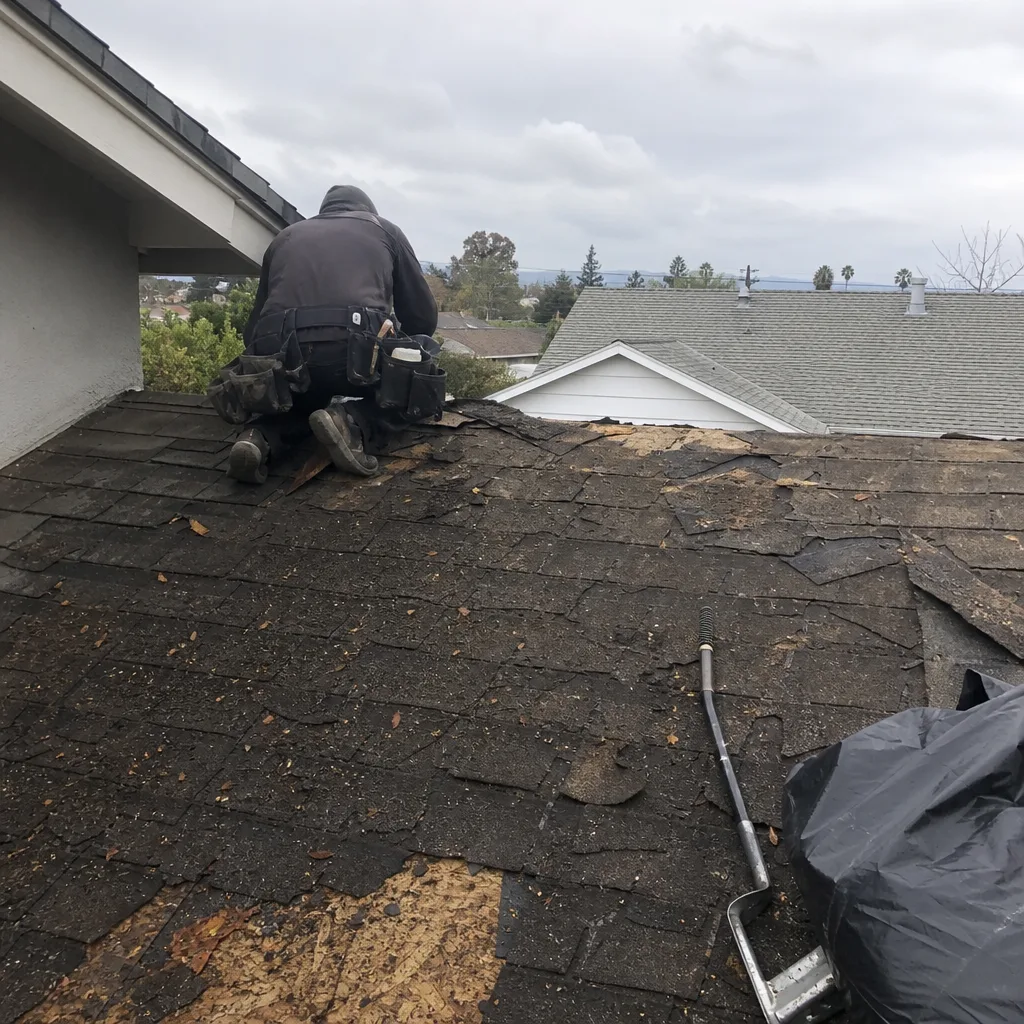 Before
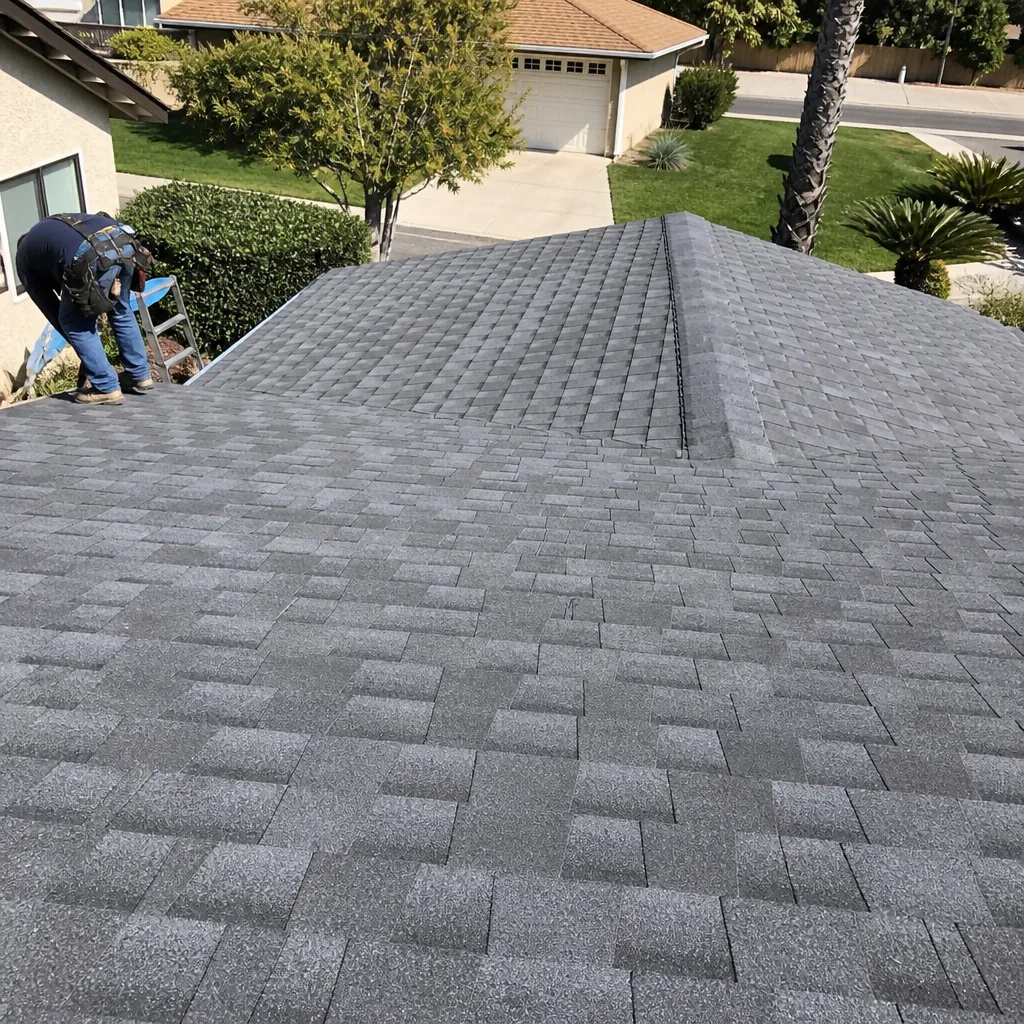 After
After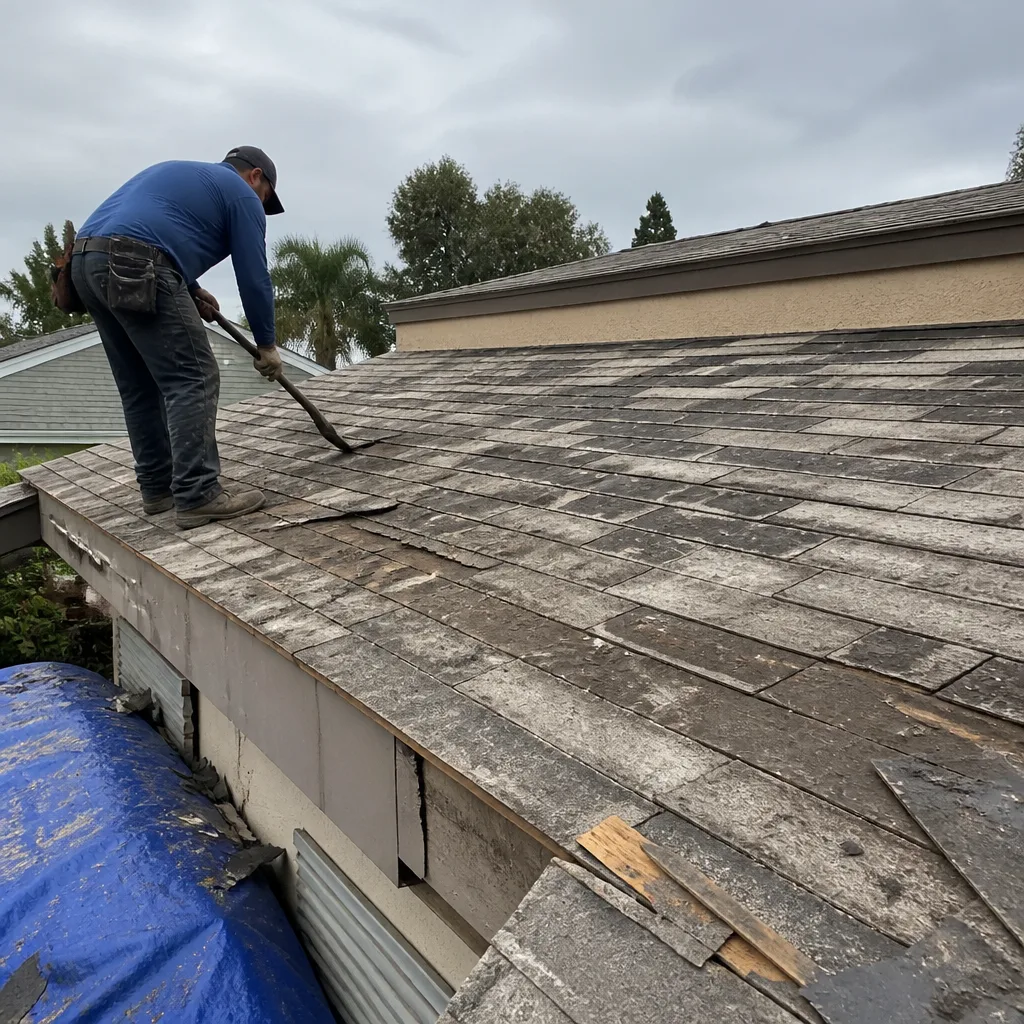 Before
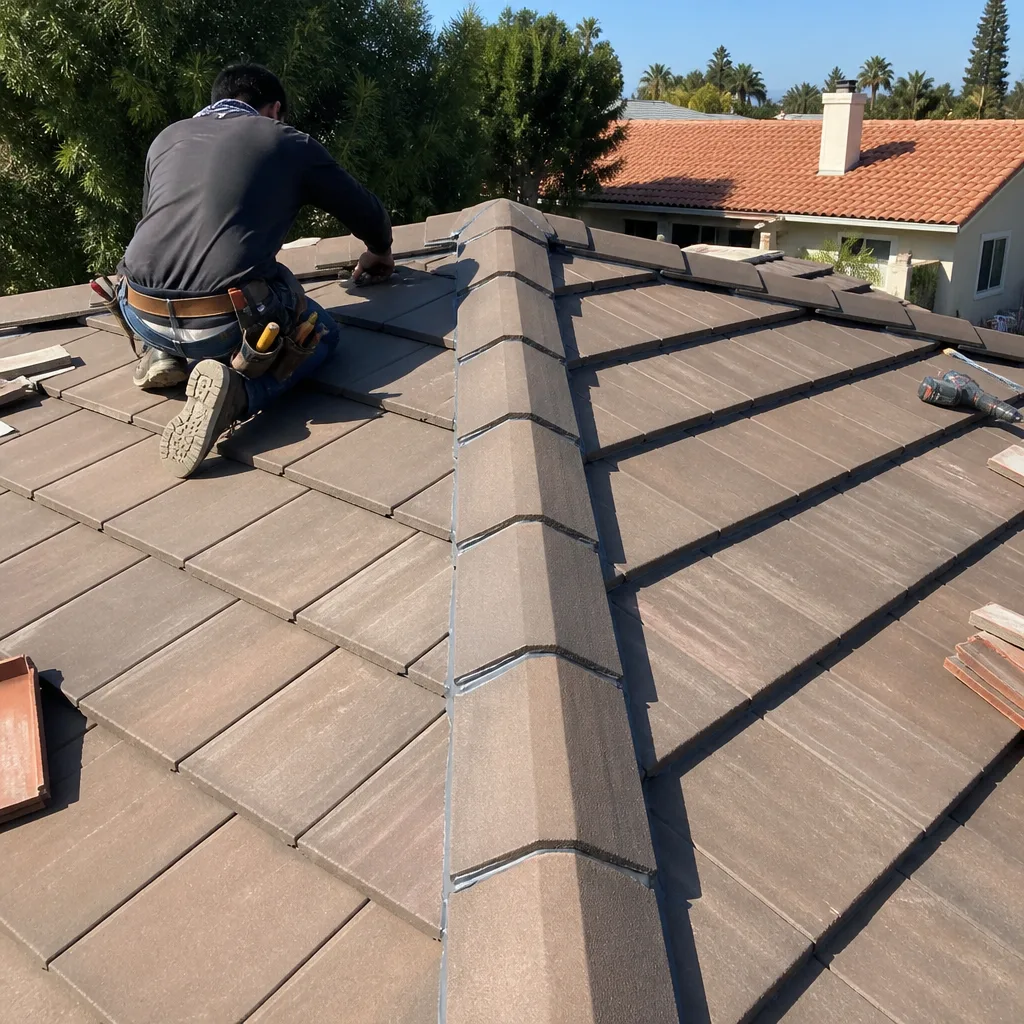 After
After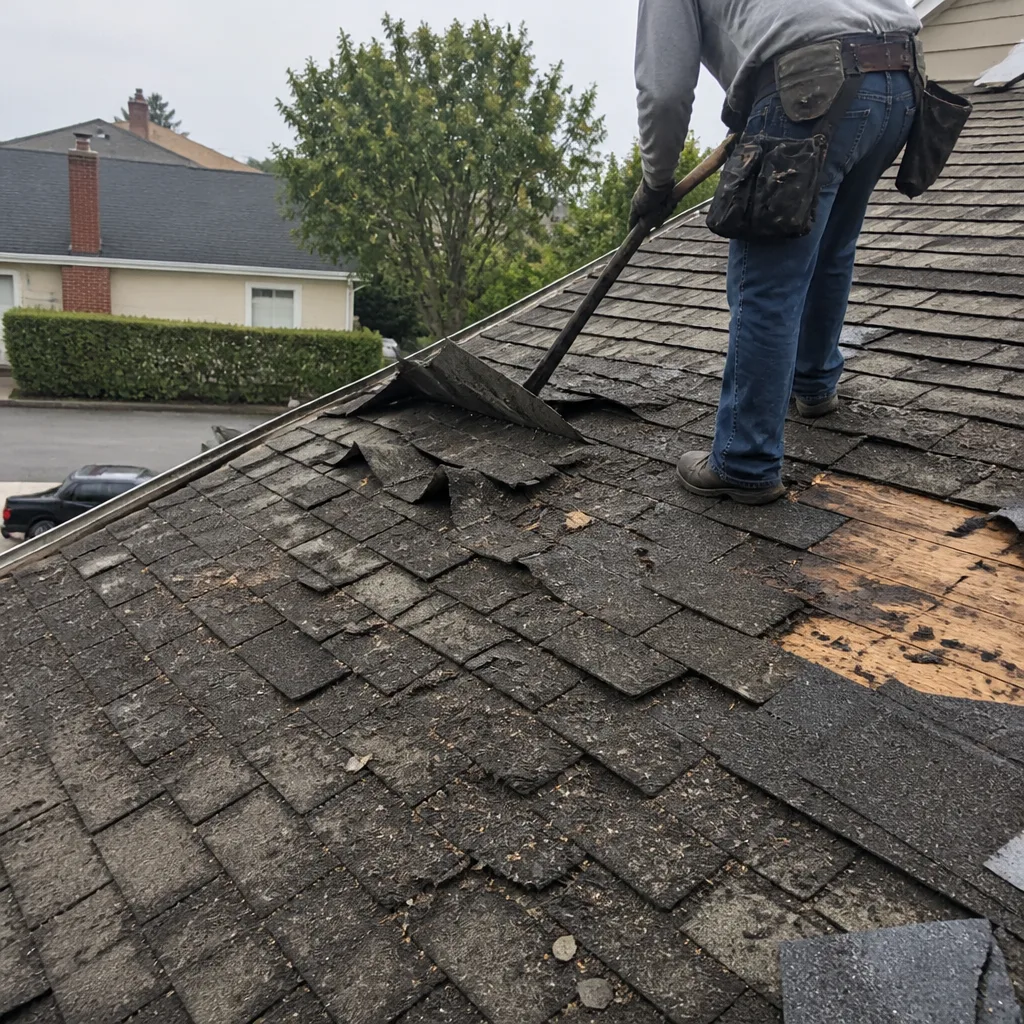 Before
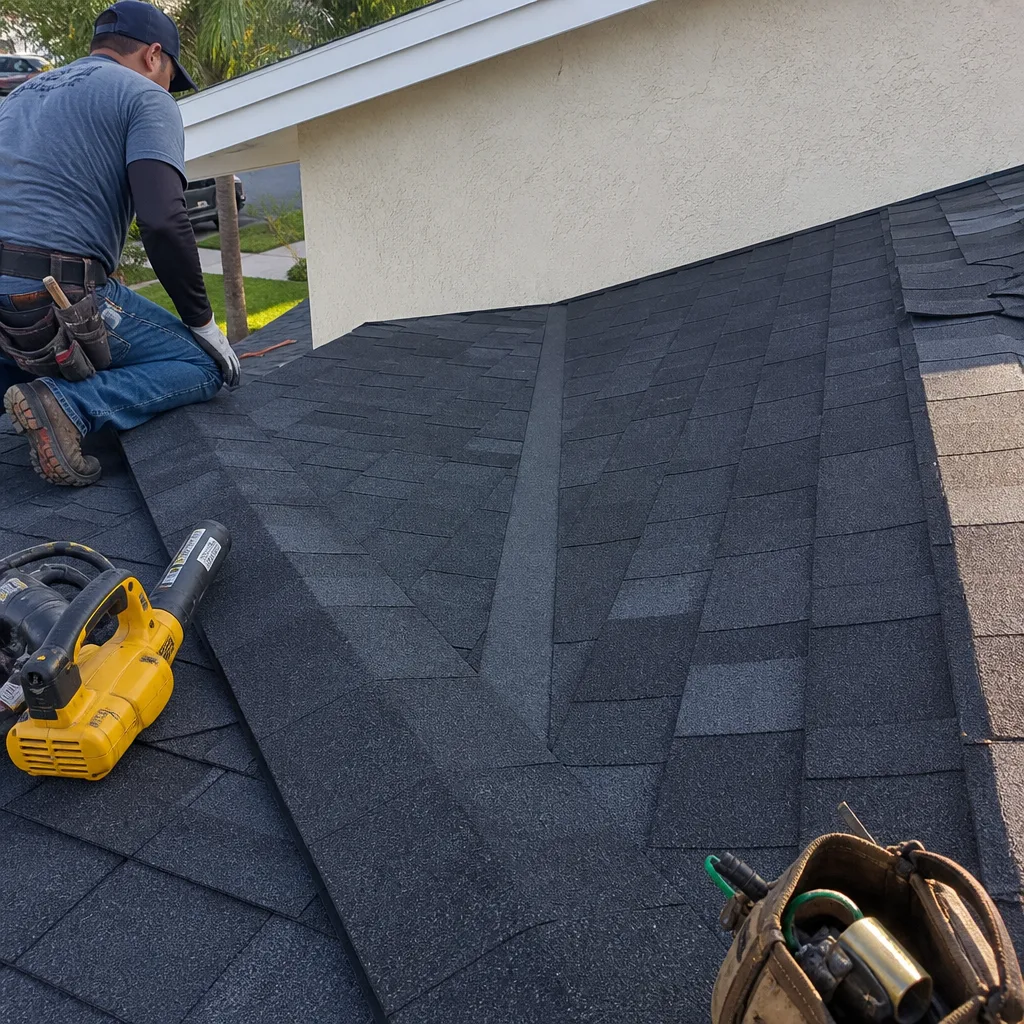 After
AfterWhen to Call a Professional
Call a licensed roofer when the work involves flashing, valleys, skylights, chimneys, tile, flat surfaces, or anything beyond a single reachable shingle. Call when your HOA requires contractor credentials. Call when you suspect the damage is older than the last storm and documentation will matter. Call when you’re not sure the roof’s failure mode is visible from the outside. In any of those situations, the cost of professional assessment is less than the cost of getting the sequence wrong. Tilehurst Roofing Orange County offers free estimates in Orange County. Call (559) 295-5445 and we’ll give you a written price before any work starts, along with a written guarantee on every repair before the crew leaves the property.
Frequently Asked Questions
Yes. California law allows homeowners to work on their own primary residence without a contractor license. However, you must still pull a permit where required, comply with building codes, and follow your HOA’s architectural approval process if one applies. Skipping those steps creates disclosure and title issues when you sell.
Most asphalt-shingle repairs in Orange County run $350 to $850 for isolated leaks, flashing corrections, or small shingle sections. Tile repairs run higher, often $500 to $1,500 depending on profile matching and underlayment work. Exact pricing depends on the scope and materials. Call (559) 295-5445 for a written quote specific to your roof.
It does not automatically void your policy, but it can complicate a future claim. If an adjuster finds evidence of unpermitted or improper workmanship and attributes the failure to that work rather than the storm event, your claim can be denied or reduced. Professional repairs produce the documentation adjusters look for.
It depends on your city. Many Orange County cities exempt small repairs under roughly 100 square feet from permit requirements, but the exact rule varies by building department. Call your city before starting any repair. Guessing wrong creates a paper trail problem that surfaces later.
Most asphalt-shingle replacements on typical Orange County homes take two to four working days from tear-off to final inspection. Tile replacements take longer, often five to ten working days, because the material is heavier and the underlayment work is more involved. Weather delays are expected.
Yes. We work regularly in Orange County communities with active architectural committees and can prepare the contractor documentation most HOAs require as part of the approval package, including license information, insurance certificates, and material specifications. Call (559) 295-5445 and ask.
The Bottom Line
The DIY roofing question in Orange County isn’t really about whether you can swing a hammer. It’s about whether you can manage the full stack: HOA approval, permit compliance, material selection, flashing detail, safety at height, and documentation that holds up when insurance or a buyer comes asking. A homeowner who’s handy can clean gutters, inspect from the ground, and maybe replace a single torn shingle. Everything past that point carries risk that compounds quietly and surfaces at the worst possible moment. If the roof needs real work, get a written price from a licensed contractor. Estimates are free. The paperwork is the point. For additional help, browse more guides & resources from our team.
Written by Greg Holloway, Owner at Tilehurst Roofing Orange County, serving Orange County since 2000.